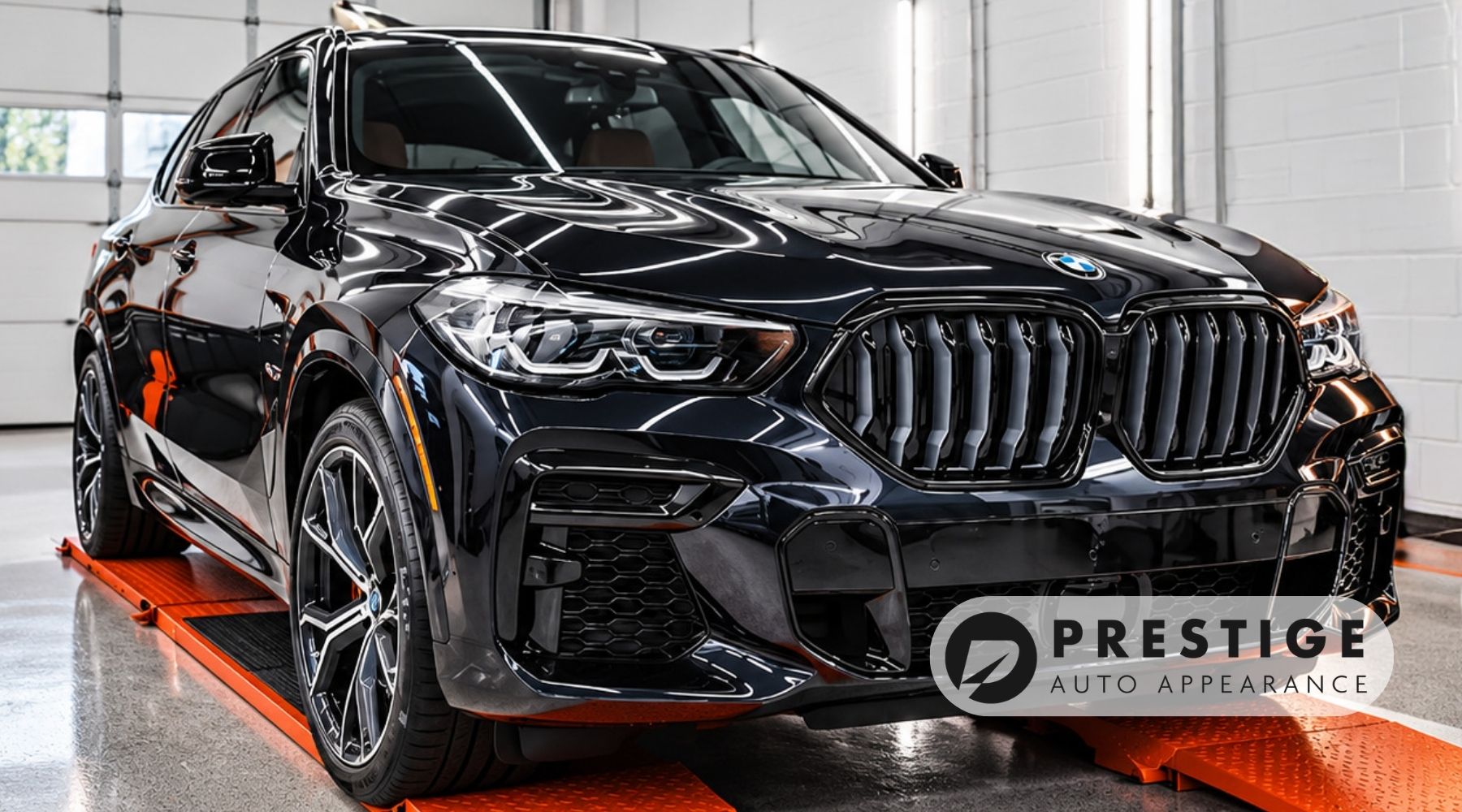

If you’ve lived in Pennsylvania long enough, you know the rain doesn’t always play fair. From sudden spring showers in Pittsburgh to days of drizzle through Lancaster’s fall season, the weather can be unpredictable—and brutal on your vehicle’s paint. That’s why we get so many questions about how to protect cars during the wetter months.
So here’s the big one: how do you properly maintain a ceramic-coated car when the rain just won’t let up? As part of the team here at Prestige Auto Appearance, we apply ceramic coating professionally—and we trust it enough to use it on our own vehicles too. That’s exactly why we’re sharing what we know in this local guide.
Why Ceramic Coating Matters in Rainy Seasons
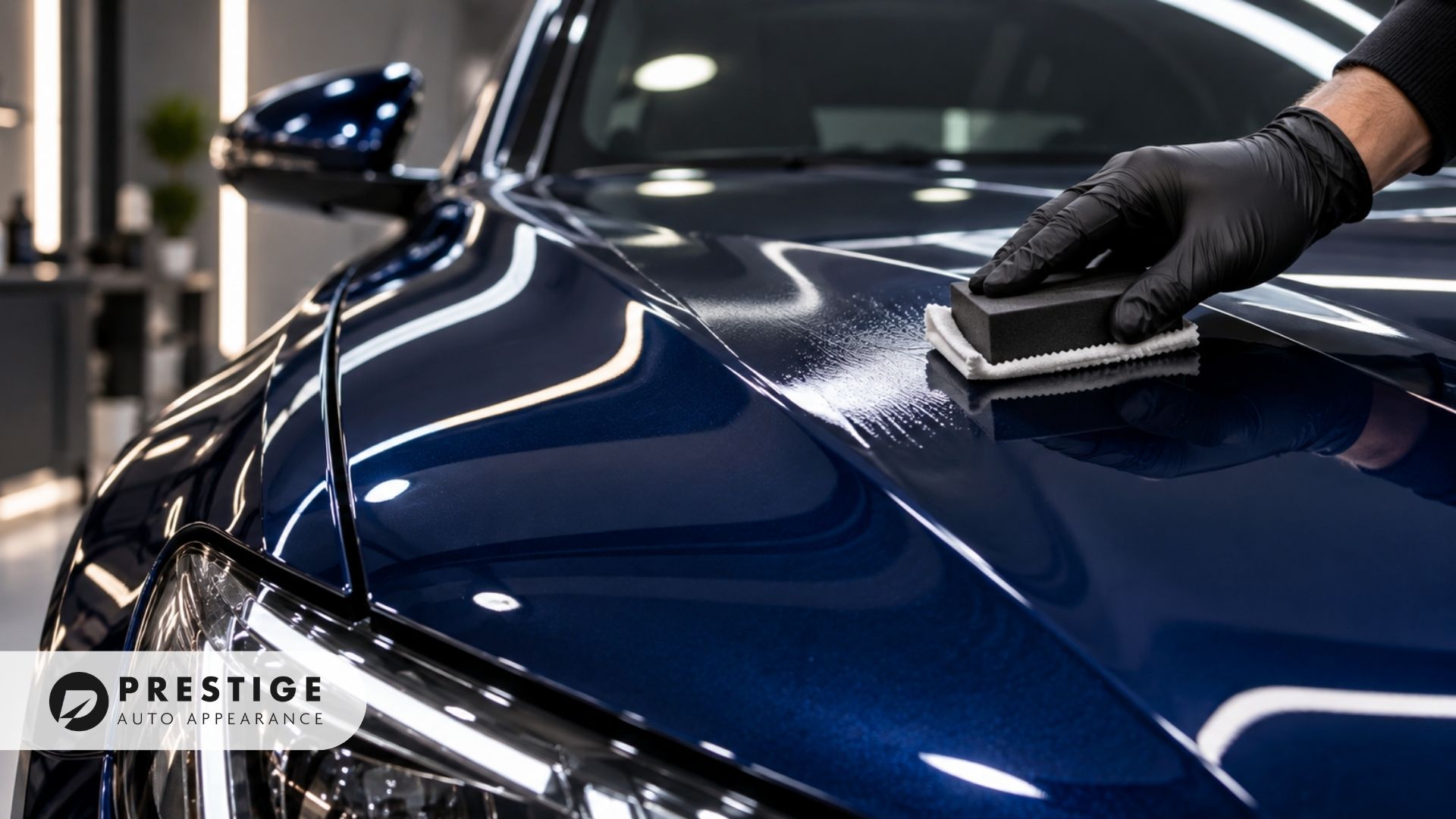
Ceramic coating is one of the most effective tools for protecting your car in tough climates like ours. It’s a liquid polymer that bonds to your car’s paint and creates a slick, durable surface that repels water and dirt. Think of it as an invisible barrier—one that not only boosts gloss and depth, but also shields against harsh contaminants like acid rain, road grime, and bird droppings.
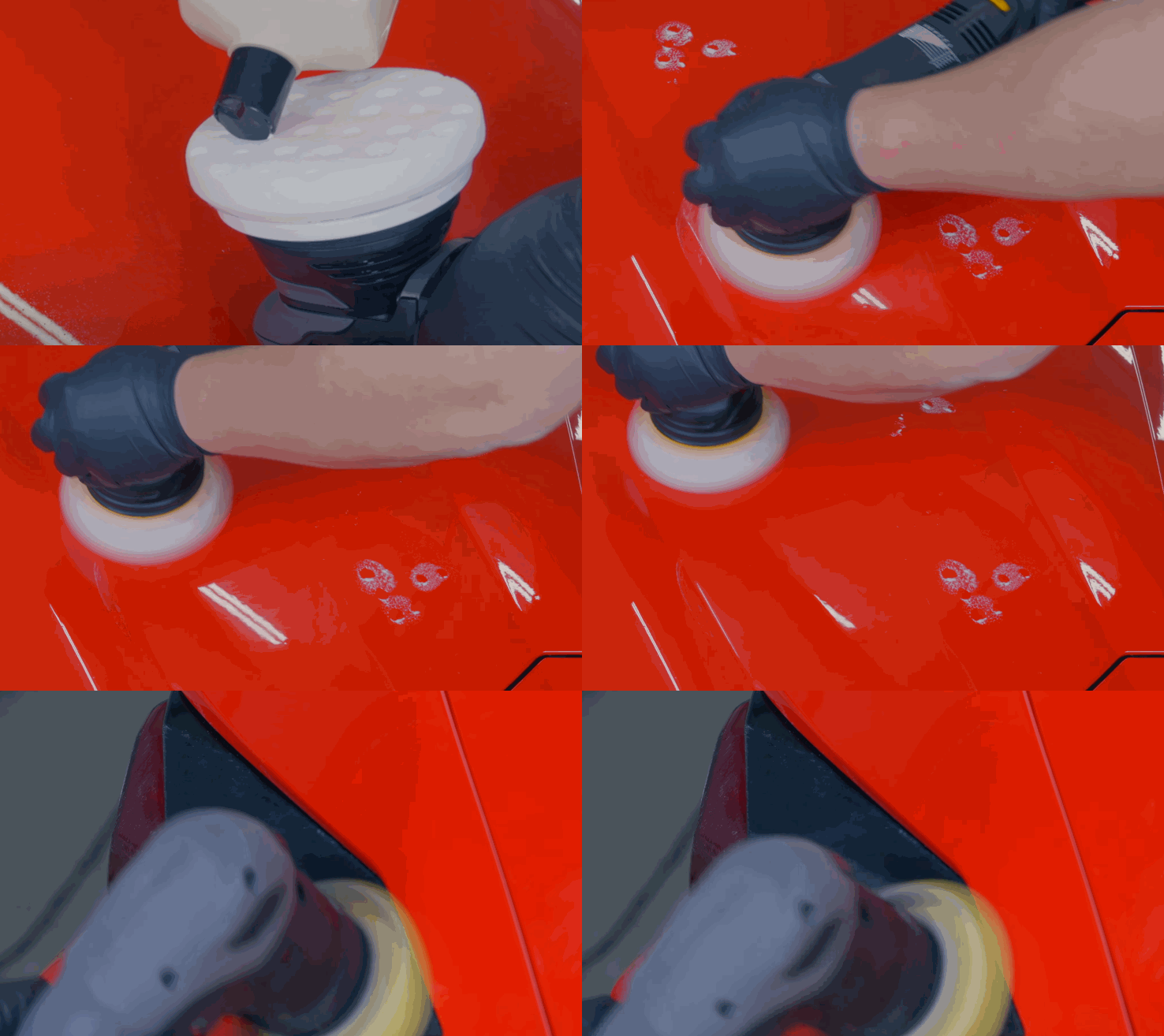
The ceramic coating application process involves multiple steps: careful surface decontamination, paint correction if needed, and then layering the coating with time for it to cure. Once cured, the surface becomes hydrophobic—water beads and rolls right off, taking dirt and debris with it. That makes post-storm cleanup easier and reduces the risk of water spots, especially after those heavy rains we see in places like Harrisburg and Bethlehem.
Common Rain-Related Threats to Your Coated Vehicle
Even with a ceramic coating in place, Pennsylvania’s environment throws plenty of challenges at your car—especially during rainy months. Here are some of the most common ones we see:
- Contaminated rainwater: Rain in industrial or wooded areas like Hershey or State College can carry more than just water. Expect pollen, tree sap, and airborne pollutants to wash onto your vehicle.
- Standing water and mud: If you drive through suburban roads or backcountry routes after a storm, your undercarriage and lower panels will take a hit.
- Road grime and salt remnants: Spring doesn’t instantly erase winter. We’ve seen salt residue lingering on PA roads well into April, adding another layer of grime for your coating to fend off.
Leaf debris and moisture retention: In heavily wooded towns like Doylestown or New Hope, fallen leaves can trap moisture and lead to localized etching or staining on exposed panels.
Weekly and Monthly Maintenance Strategies
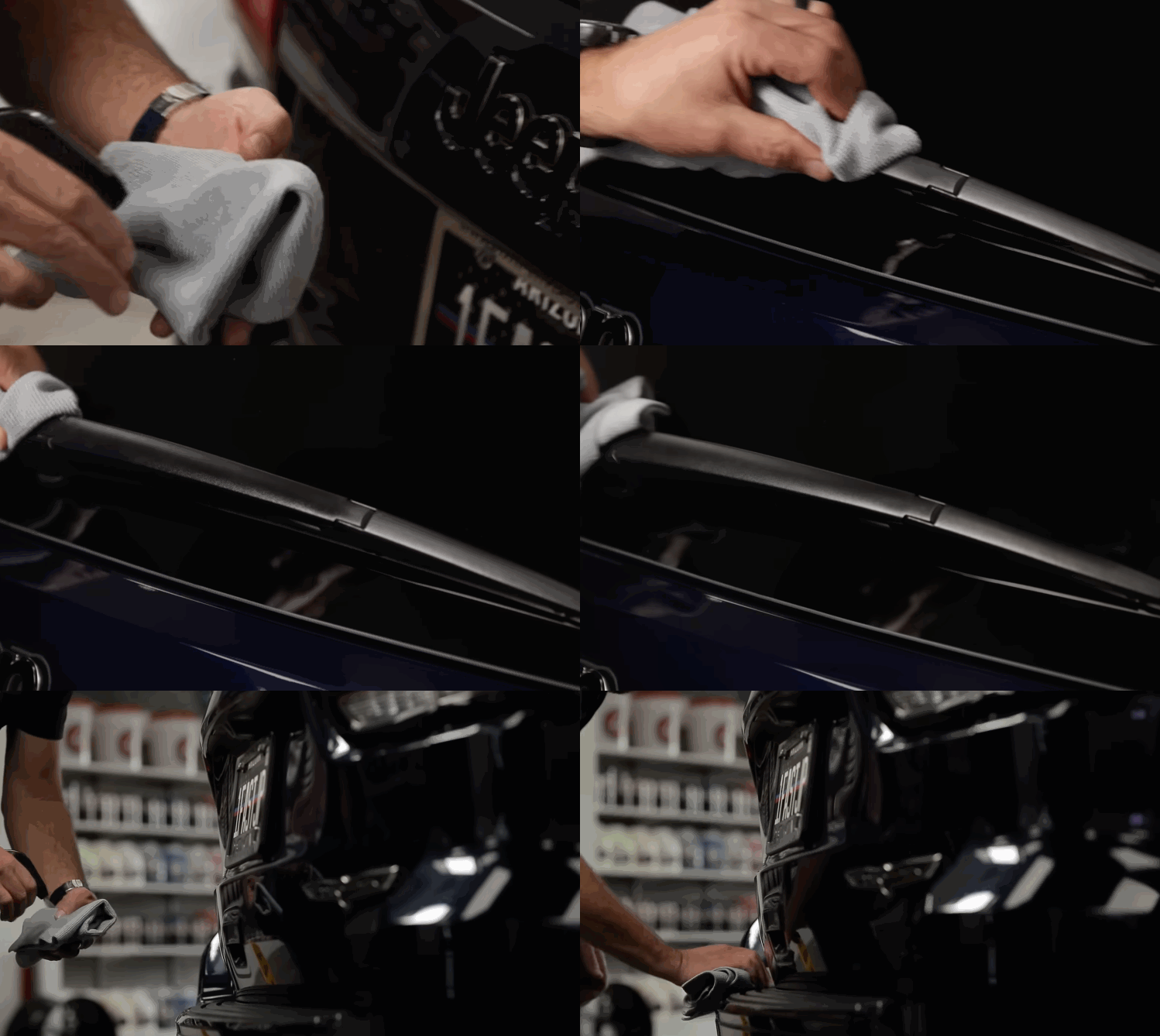
Consistent upkeep is the key to extending the life of your ceramic coating—especially in Pennsylvania, where rain can hit hard for weeks at a time. Here’s how we maintain our own vehicles and what we recommend to our clients:
Routine Washing Schedule
- During rainy months, we suggest washing your ceramic-coated car once every 1 to 2 weeks, depending on how often you drive.
- Always use pH-neutral soaps specifically formulated for ceramic coatings. These help preserve the hydrophobic layer without degrading it.
Inspecting the Hydrophobic Layer
- Want to know if your ceramic coating is still doing its job? Try this simple test: spray water on a panel. If it beads up tightly and rolls off, you’re good.
- If water starts pooling or leaves streaks, it might be time to apply a ceramic booster spray or bring it in for a professional refresh.
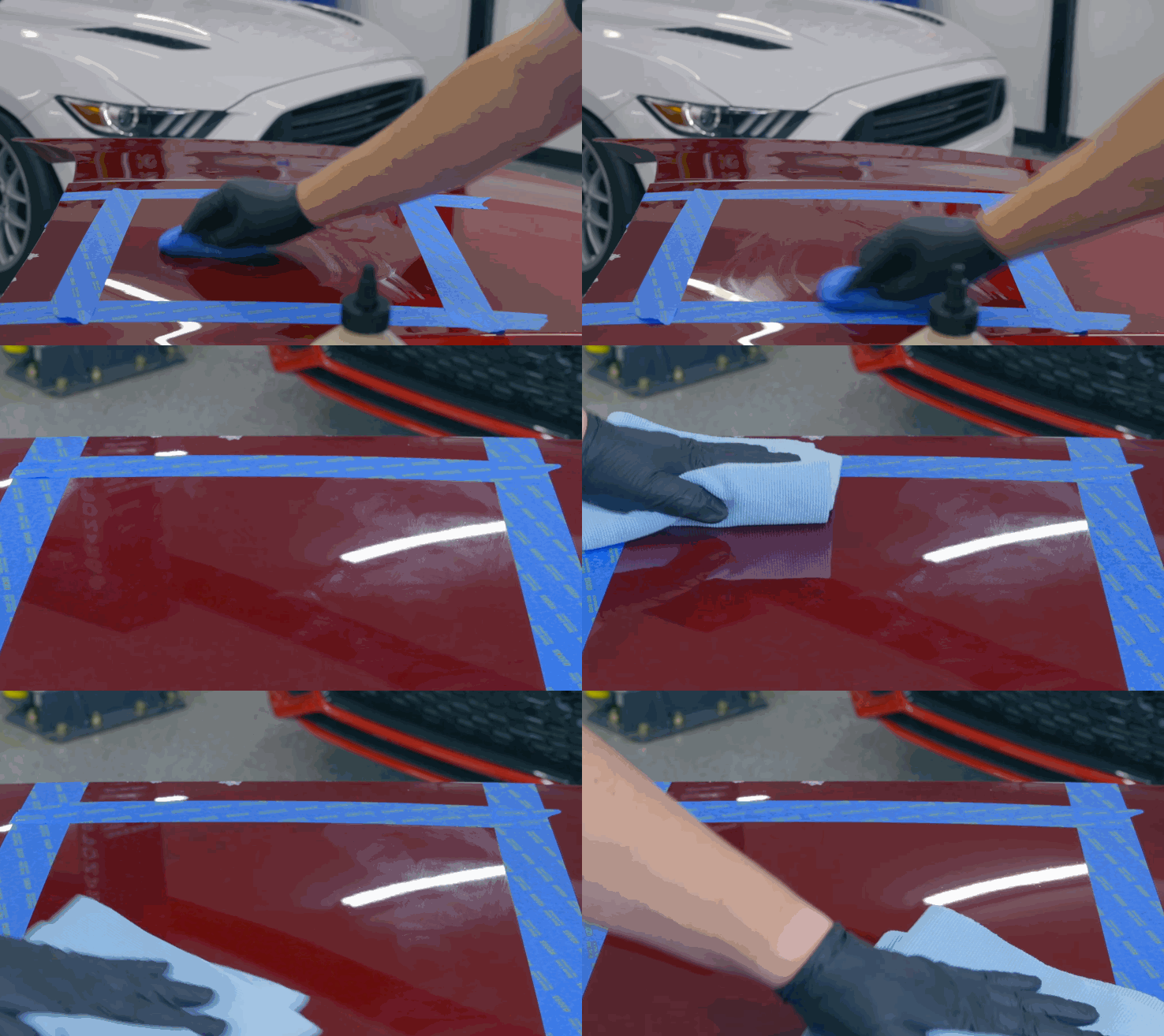
Clay Bar and Decontamination (When Needed)
- Even the best coatings can collect bonded contaminants—especially if you park near factories or under trees.
- If your coated surface starts to feel rough, that’s a sign it may need a light clay bar treatment, followed by a reapplication of your booster spray.
For most cars in Pennsylvania, we only recommend this every few months—not after every storm.
What to Watch Out For: Signs Your Coating Needs Help
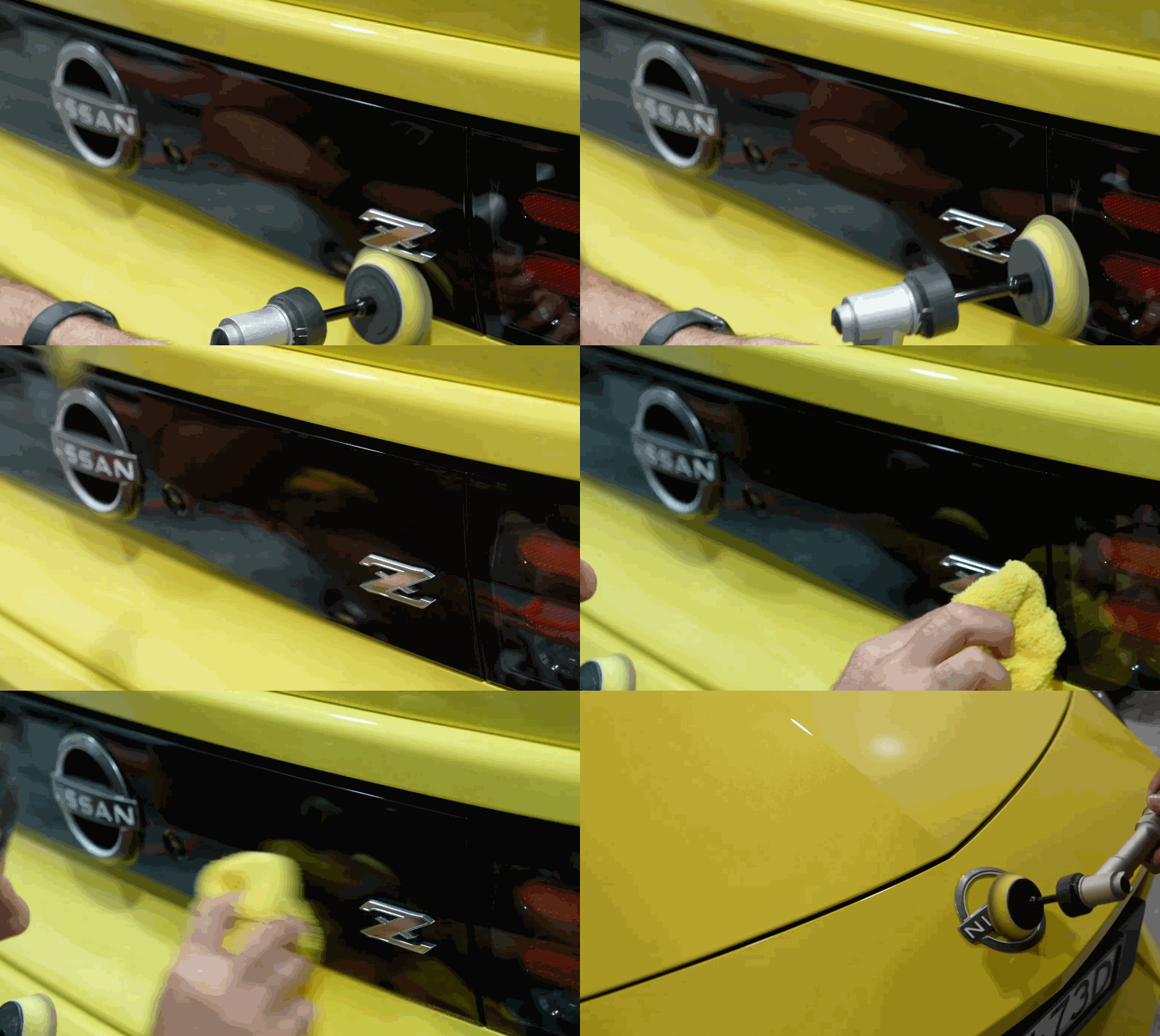
Even a well-applied ceramic coating needs occasional check-ins. Keep an eye out for these warning signs:
- Water no longer beads or sheets off—this means the hydrophobic layer is losing effectiveness.
- Dirt sticks more easily—if it’s harder to rinse off road grime, your coating may need maintenance.
- Gloss looks dull or uneven—especially after repeated exposure to rain or washing with harsh soaps.
You notice texture changes—the surface should feel smooth. If it starts feeling gritty, it could be contaminated.
When in doubt, bring your car in for a quick inspection. At Prestige Auto Appearance, we can determine if your coating just needs a boost or if it’s time for a more thorough reapplication.
Post-Rain Care Tips for Ceramic-Coated Vehicles
To help your ceramic coating continue performing at its best, here’s what we recommend after any significant rain:
Rinse Off Residue Promptly
- Use a touchless rinse to remove pollutants and grime after driving in the rain or through puddles.
- Don’t wait for the sun to dry it—those water spots can etch, especially in Eastern PA where humidity levels shift quickly after a storm.
Drying Techniques That Preserve the Coating
- Stick to soft microfiber towels or air blowers.
- Blot gently instead of rubbing, as this avoids micro-marring the surface.
Avoiding Automatic Car Washes
- Ceramic coatings and stiff rotating brushes don’t mix well. They can strip away the coating or create swirls in the clear coat.
- Instead, use hand washing or reliable touchless wash options—we recommend a few around Allentown and Mechanicsburg that we’ve vetted ourselves.
Final Thoughts: Keep the Shine Going Through Every Storm
Pennsylvania weather is no joke—especially during the rainy seasons when roads stay wet for days and every commute feels like a splash zone. But the right ceramic coating, applied and maintained properly, can keep your car looking great no matter what Mother Nature throws your way.
We see the results firsthand on our own vehicles and on those we maintain for clients across the state. Whether you drive through the wet backroads of Bucks County or navigate city rain in Philly, a well-maintained coating is worth it.
If you’re not sure how your current coating is holding up—or if you’re just getting started—we’re here to help. Reach out to Prestige Auto Appearance for a consultation, a coating checkup, or a refresh appointment. No pressure—just honest advice from a team that lives (and drives) through Pennsylvania weather every day.