
Ceramic coating is a liquid protective product that chemically bonds with a vehicle’s exterior surface, creating a durable layer that helps preserve the finish. It provides resistance against environmental contaminants, UV exposure, chemical staining, water spots, and everyday road grime while making routine cleaning easier.
Professional ceramic coating application also requires careful surface preparation and controlled installation rather than simply spreading a product over the paint. For drivers in Allentown, PA, that added protection is especially useful through winter road treatments, spring pollen, summer sun, and the changing conditions vehicles experience throughout the Lehigh Valley.
What Does Ceramic Coating Do for Your Car?
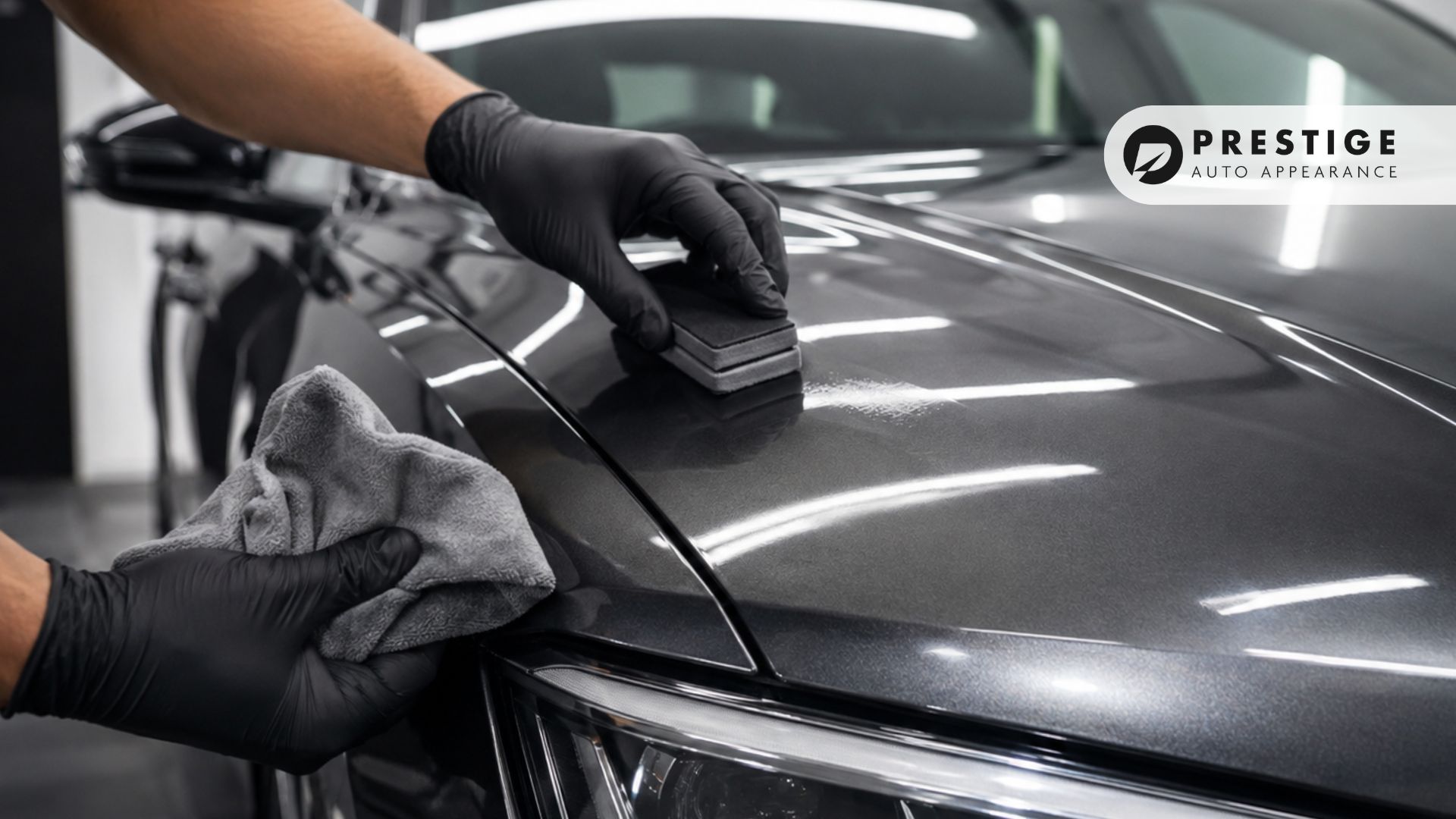
Ceramic coating creates a durable protective surface over automotive paint, helping resist environmental contamination while making the vehicle easier to wash and maintain. Once properly applied, the coating chemically bonds with the clear coat rather than sitting loosely on top like a traditional wax.
One of the characteristics drivers notice most is its hydrophobic behavior. Water tends to bead and move away from the surface, taking some dirt and loose contamination with it. A quality automotive ceramic coating can also provide chemical resistance, UV protection, and greater visual depth, giving the paint a richer gloss while supporting long term car paint protection.
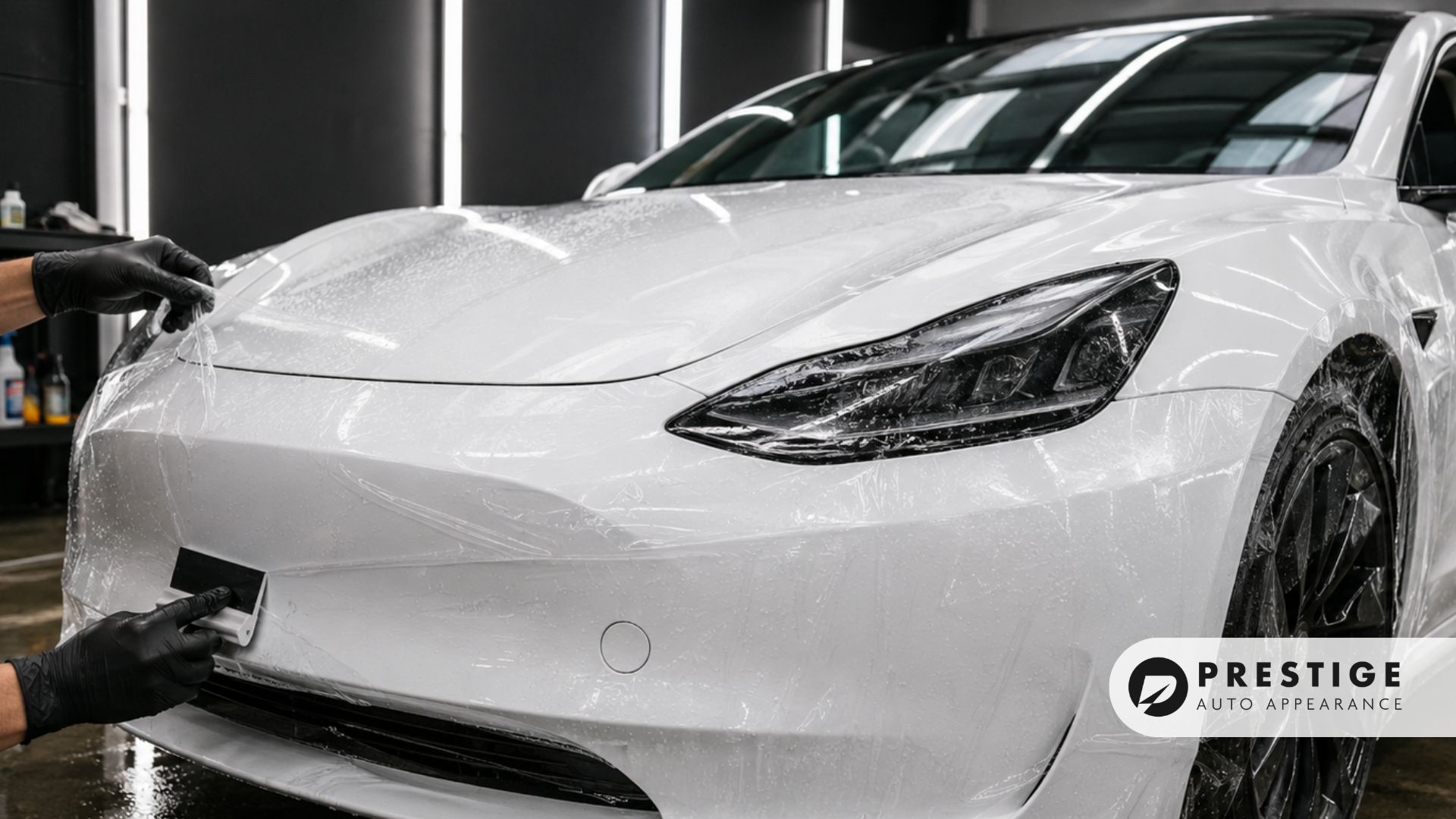
At Prestige Auto Appearance, we also believe it is important to be clear about what a coating cannot do. A hydrophobic coating does not make your paint scratch proof, nor can it absorb the impact of a stone traveling toward your hood at highway speed. Those are jobs better suited to paint protection film. Ceramic protection is primarily about defending the finish from environmental exposure and making that finish easier to care for.
How Does Ceramic Coating Application Work?
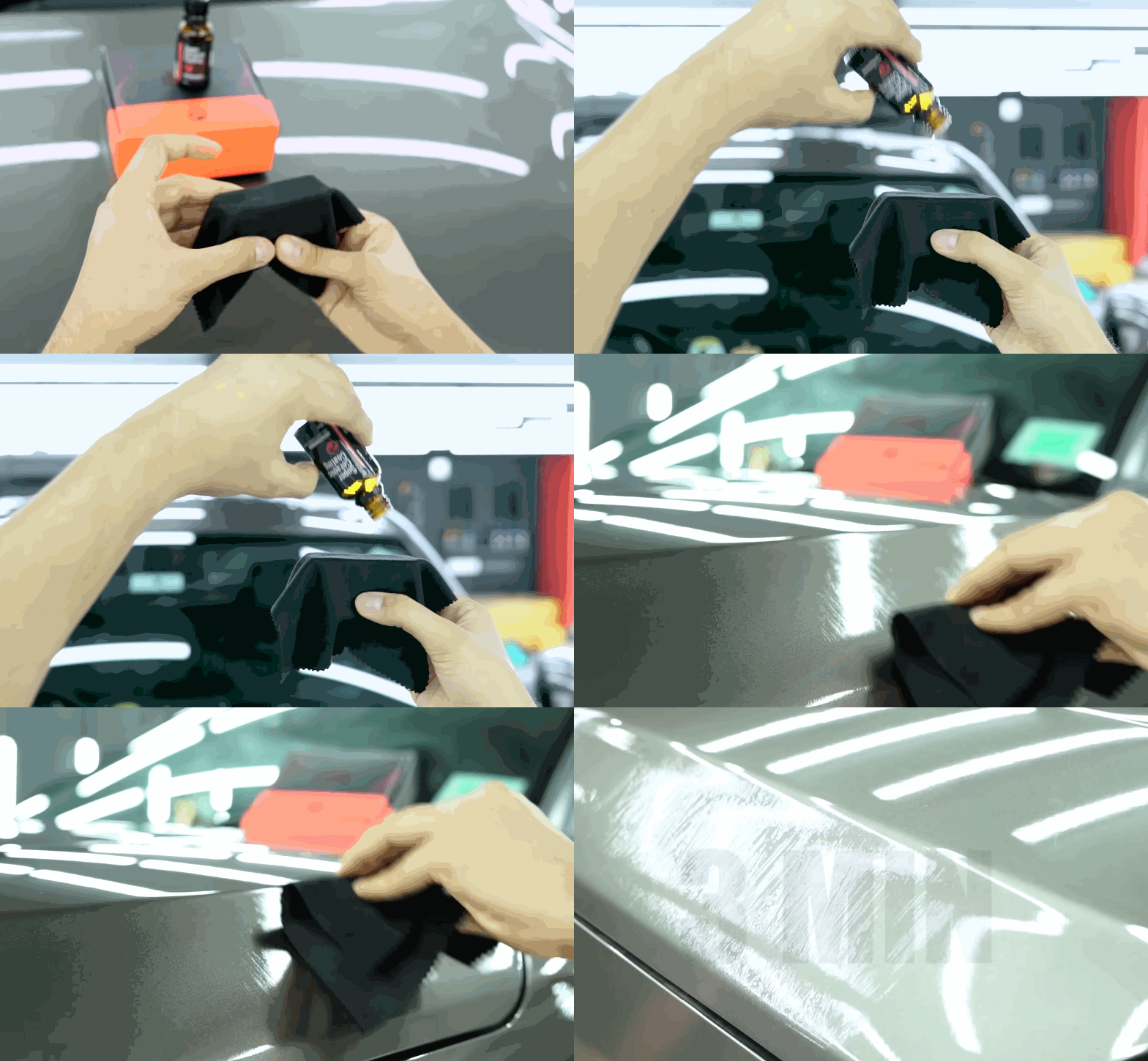
Professional ceramic coating application starts well before the coating itself is opened. The condition of the surface underneath has a direct effect on how clean the final result looks and how effectively the product can bond.
A typical professional process includes:
- Inspecting the paint to identify existing defects and contamination.
- Thoroughly washing the exterior to remove loose dirt and grime.
- Decontaminating the paint to remove embedded particles that normal washing cannot address.
- Correcting swirl marks, oxidation, or other imperfections when necessary.
- Preparing the surface to remove oils and residues that could interfere with bonding.
- Applying the ceramic coating evenly and carefully leveling the product.
- Allowing sufficient curing time under appropriate environmental conditions.
Paint correction is not automatically necessary for every vehicle, but applying a coating over visible imperfections does not make them disappear. In fact, protecting a poorly prepared surface can leave those defects visible beneath the finished coating.
That is why our team at Prestige Auto Appearance puts so much emphasis on preparation. We want the paint to be in the right condition before application begins, rather than rushing through the steps that ultimately determine the appearance and longevity of the finished surface.
Why Is Ceramic Coating Useful in Allentown, PA?
Ceramic coating is particularly useful in Allentown because local vehicles deal with environmental contamination and dramatically different weather conditions throughout the year. Pennsylvania does not give automotive paint much of a break between one season and the next.
Winter introduces road salt, deicing chemicals, slush, and dirty road spray throughout Allentown and the Lehigh Valley. Vehicles traveling regularly on Route 22 or I 78 can accumulate a stubborn layer of winter grime, especially during periods when roads are repeatedly treated for snow and ice.
Spring changes the problem rather than eliminating it. Pollen and organic contamination settle onto exterior surfaces, while warmer weather brings more insects. Summer adds stronger UV exposure and heat, followed by fall conditions that can introduce leaves, tree sap, and other organic material.
A ceramic coating cannot prevent those contaminants from reaching your car, but its slick, chemically resistant surface can make them considerably easier to remove. That matters because contaminants generally become more troublesome when they remain bonded to the paint for extended periods. For an Allentown daily driver that spends the entire year outside rather than tucked away in a garage, easier cleanup can make a noticeable difference in how manageable exterior care feels.
What Are the Main Benefits of Ceramic Coating?
The main benefits of ceramic coating are easier cleaning, greater environmental resistance, lasting gloss, and reduced maintenance demands. Good ceramic paint protection is less about eliminating vehicle care and more about making that care easier while giving the finish another line of defense.
Key advantages include:
- Hydrophobic water behavior: Water beads readily on the coated surface, making drying and routine washing easier.
- Chemical resistance: The coating provides additional resistance against contaminants that could otherwise stain or etch the finish.
- UV protection: Added resistance to UV exposure helps protect the appearance of automotive paint over time.
- Simpler contaminant removal: Dirt, pollen, insects, and road grime have a harder time bonding aggressively to the slick surface.
- Enhanced paint gloss: A properly prepared and coated finish can have greater depth, clarity, and shine.
These advantages are not limited to exotic cars or vehicles that only come out on sunny weekends. In many ways, a daily driver can benefit even more because it experiences constant exposure to weather, traffic, parking lots, and Pennsylvania roads. For someone commuting around Allentown throughout the week, vehicle paint protection that reduces cleaning effort while preserving the finish can be a practical form of long lasting car protection, not simply a cosmetic luxury.
How Long Does Ceramic Coating Last?
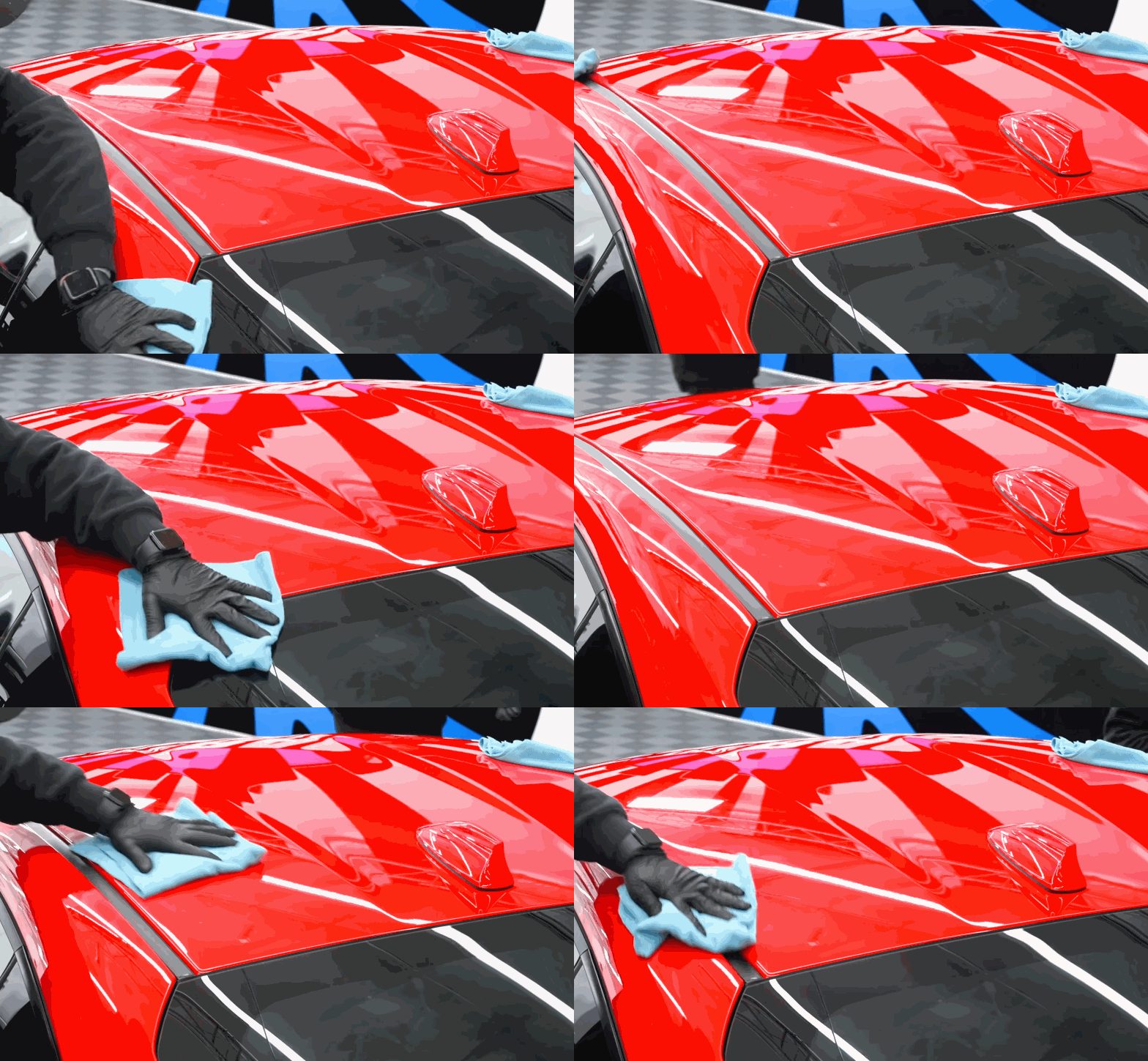
Ceramic coating can protect a vehicle for several years, but its actual lifespan depends on the product, application quality, driving frequency, storage conditions, and maintenance. No professional coating should be treated as permanent or completely maintenance free.
A daily driven vehicle naturally puts its protection through more stress than a car that spends most of its time inside a garage. Frequent highway mileage around the Lehigh Valley means more exposure to road grime, insects, precipitation, and environmental contaminants. Outdoor parking adds constant weather exposure, while Pennsylvania winters introduce road salt, deicing chemicals, snow, and repeated freeze and thaw cycles.
Washing habits matter as well. Harsh chemicals and abrasive cleaning methods can shorten the coating’s useful life, while appropriate maintenance helps preserve its performance. At Prestige Auto Appearance, we encourage proper aftercare and periodic professional maintenance rather than assuming the coating can simply be forgotten after installation. Taking care of the protected surface helps owners get the greatest possible value from their investment.
How Should You Maintain a Ceramic Coated Vehicle?
Maintaining a ceramic coated vehicle primarily requires safe washing and periodic inspection, not an elaborate detailing routine. One of the reasons many drivers choose this protection is that keeping the exterior clean generally becomes more manageable after a professional ceramic coating application.
The goal is to avoid allowing contamination to remain on the surface unnecessarily. Road salt should be removed regularly during an Allentown winter, just as pollen, insects, bird droppings, and organic residue should not be left sitting on the vehicle for extended periods during warmer months.
Keep the Washing Process Gentle
Use an automotive soap suitable for coated finishes along with clean, high quality microfiber wash mitts and drying towels. Aggressive detergents, abrasive materials, and automatic washes with spinning brushes can introduce unnecessary wear.
The hydrophobic effect also provides a useful indication of surface condition. If water stops beading as strongly as it once did, that does not automatically mean the ceramic coating has failed. Mineral deposits, road film, and other contamination can build up on top of the coating and temporarily reduce its water behavior. A proper decontamination wash may restore performance without requiring a completely new application.
Is Ceramic Coating Worth It for Allentown Drivers?
Ceramic coating can be worth the investment for Allentown drivers who want easier maintenance and better long term protection for their vehicle’s finish. Its value becomes clearer when the benefits are considered according to how the vehicle is actually owned and driven.
For daily commuters: Frequent travel on Route 22, I 78, and roads throughout the Lehigh Valley means repeated exposure to road grime, weather, insects, and seasonal contamination. A coated surface makes that accumulation easier to manage.
For newer vehicles: Applying protection while the finish is still in excellent condition can help preserve that appearance rather than waiting until years of environmental exposure require more extensive correction.
For enthusiast vehicles: Owners who care about paint depth, gloss, and presentation can benefit from the visual enhancement of a properly prepared and coated finish.
For long term owners: Reduced detailing demands and better preservation of the exterior can provide value over years of ownership, particularly for vehicles that experience every Pennsylvania season.
There is still an important distinction to make. Ceramic coating provides excellent environmental and chemical protection, but it is not designed to absorb significant physical impacts. Drivers whose main concern is preventing rock chips and damage from road debris should consider paint protection film for those vulnerable areas, either instead of a coating or as part of a combined protection strategy.
Choose Professional Ceramic Coating Application in Allentown, PA
Professional ceramic coating application gives the product the best opportunity to bond correctly, achieve a clean finish, and provide its intended durability. The quality of the final result depends on much more than the coating itself.
Paint condition needs to be assessed first, followed by thorough cleaning and surface preparation. Any necessary correction should happen before application, and the coating must then be installed carefully under suitable conditions and given adequate time to cure. Proper aftercare completes the process by helping preserve the protection after the vehicle returns to regular use.
At Prestige Auto Appearance, we evaluate each vehicle based on its current condition, how it is driven, and what the owner wants to protect. That allows us to recommend a solution that makes sense for a daily commuter, a recently purchased vehicle, or a car whose finish deserves some extra attention.
For Allentown and Lehigh Valley drivers dealing with winter road treatments, summer sun, pollen, road grime, and changing weather throughout the year, ceramic coating offers a practical way to make exterior care easier while adding lasting protection. Contact Prestige Auto Appearance today to discuss professional ceramic coating application and find the right level of protection for your vehicle.