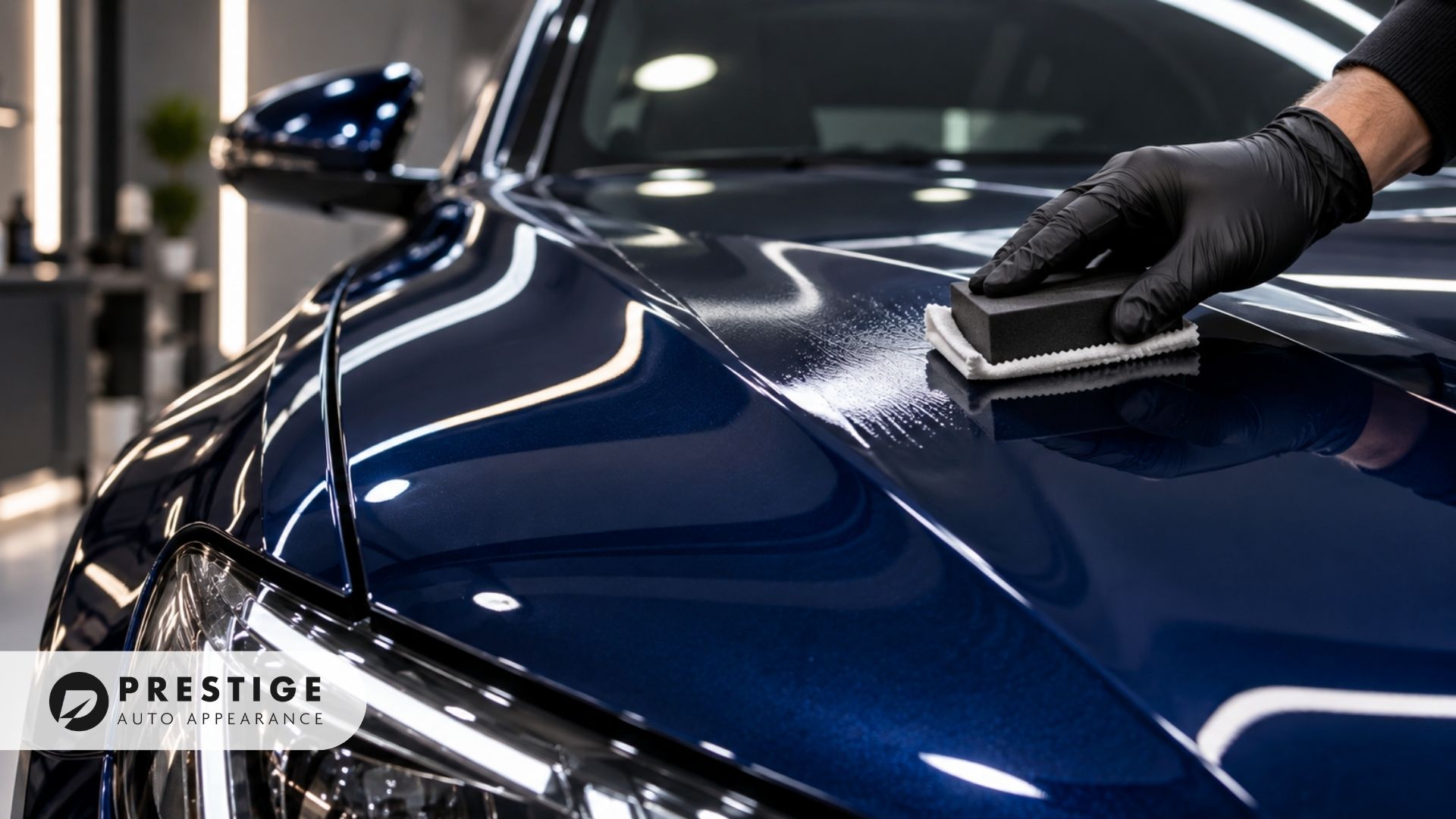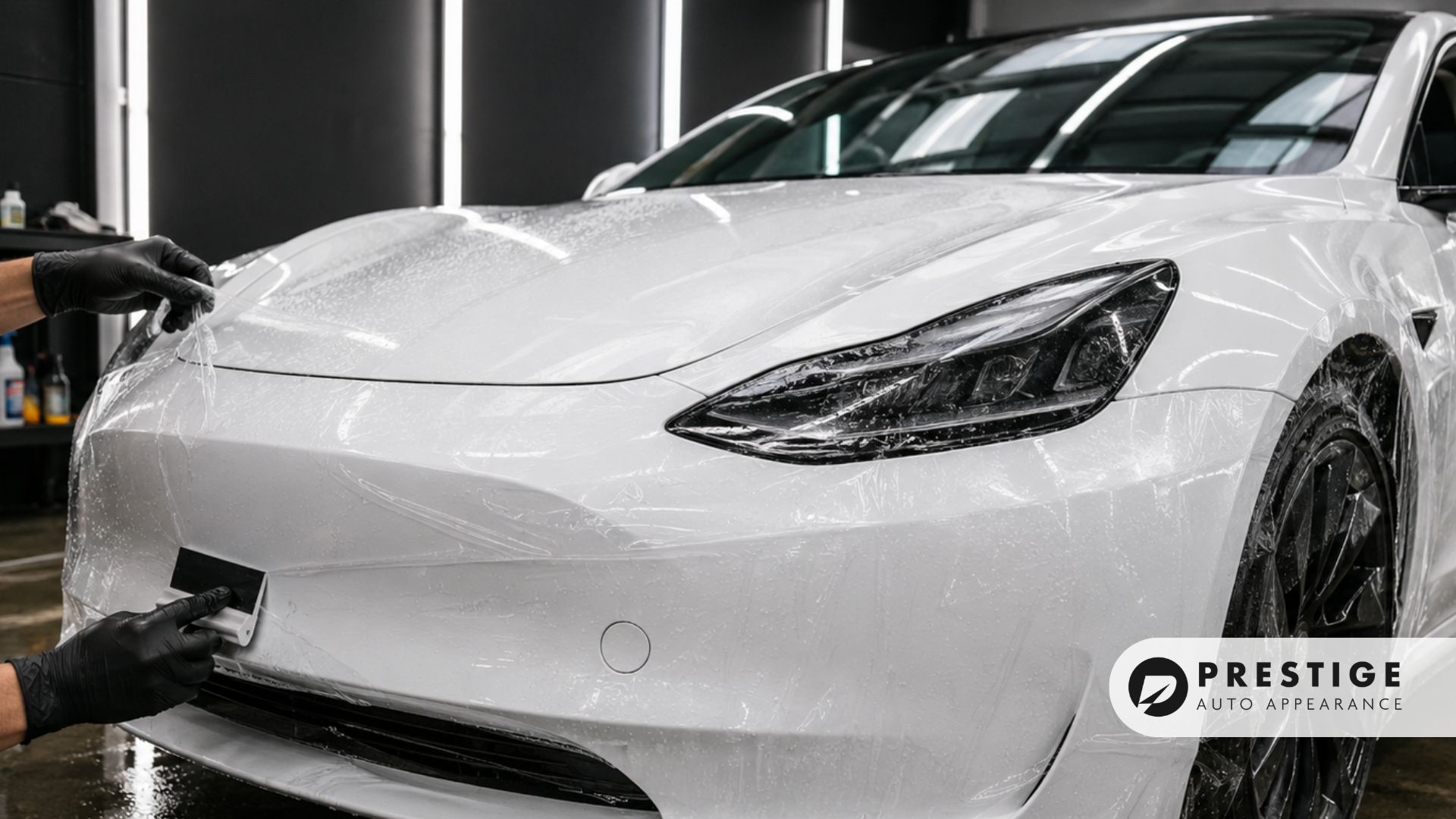

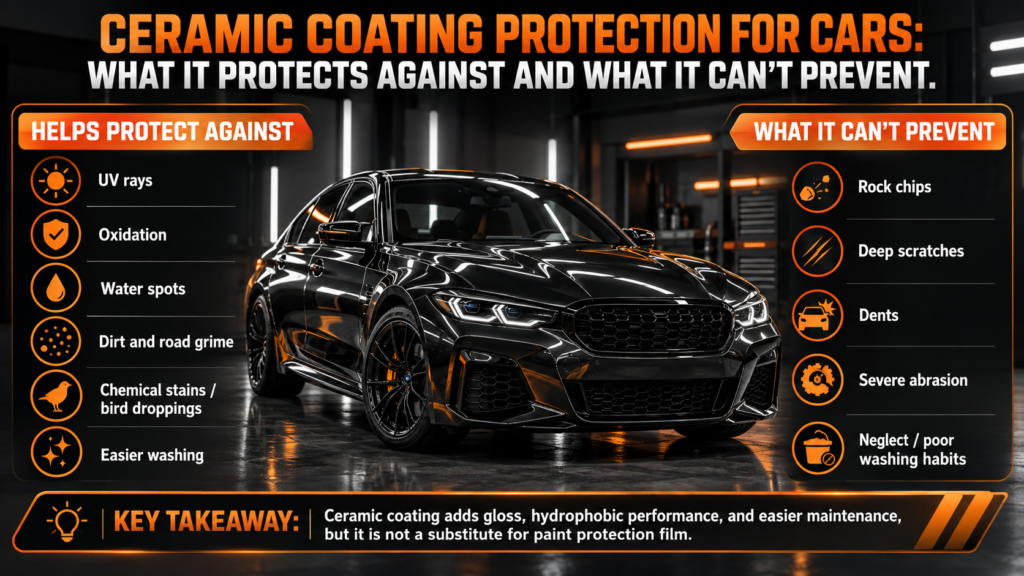
Ceramic coating protects automotive paint against environmental contamination, UV exposure, chemical staining, road grime, and other substances that can gradually affect the finish. It also creates a hydrophobic surface that makes routine cleaning easier. What it cannot do is stop rock chips, deep scratches, dents, or other physical impact damage.
For drivers in Allentown and throughout the Lehigh Valley, that distinction matters. Pennsylvania winters bring road salt and dirty spray, warmer months bring insects and pollen, and daily driving adds grime throughout the year. Professional ceramic coating application can provide a durable layer of surface protection against many of these contaminants, but understanding its limitations is just as important as understanding its benefits.
What Does Ceramic Coating Actually Protect Your Car From?
Ceramic coating primarily protects the exterior against environmental and chemical contaminants that would otherwise come into direct contact with the clear coat. Once properly applied and cured, the coating forms a durable bond with the surface rather than behaving like a temporary layer of conventional wax.
At Prestige Auto Appearance, we see the greatest practical value in how ceramic protection helps a vehicle handle repeated everyday exposure. Depending on the coating and how the vehicle is maintained, important areas of protection can include:
- Road grime: Dirt and oily residue have a harder time adhering strongly to the coated surface.
- UV exposure: Ceramic coating can help reduce the effects of prolonged ultraviolet exposure on the finish.
- Chemical contaminants: The coating provides an additional barrier against substances that could otherwise stain or etch the clear coat.
- Bird droppings and insect residue: These contaminants can be easier to remove before they have an opportunity to cause lasting damage.
- Tree sap and organic material: A coated surface provides an added layer between these substances and the clear coat.
- Road salt and winter residue: This is particularly relevant for vehicles driven through Pennsylvania winters.
These benefits do not eliminate the need to wash your vehicle. Instead, the coating gives the paint a more resistant surface and makes it easier to manage the contaminants that come with normal driving.
How Does Ceramic Coating Help During Pennsylvania Winters?
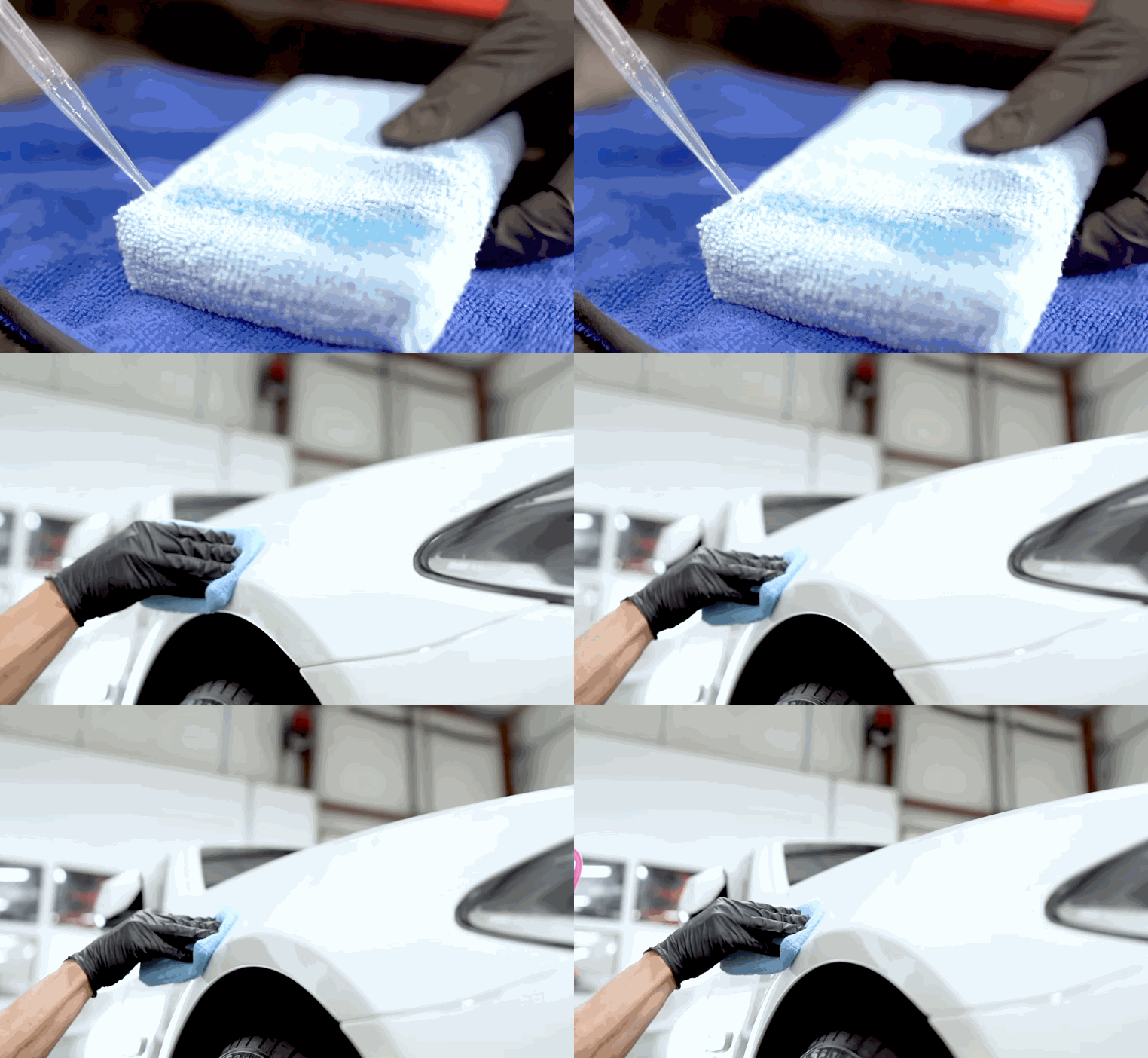
Ceramic coating is particularly useful during Pennsylvania winters because it creates an additional barrier against road salt, deicing chemicals, dirty water, and the grime that accumulates during wet and snowy conditions. For a daily driver around Allentown, winter can be one of the hardest periods of the year for keeping exterior surfaces clean.
Travel on Route 22, I 78, and other busy Lehigh Valley roads can leave the lower body, rear panels, and front end covered in dirty road spray. Moisture carries salt and road residue onto the vehicle, and repeated exposure can leave the exterior looking dull and difficult to maintain.
A professionally coated vehicle is generally easier to wash because contaminants have more difficulty bonding strongly to the treated surface. That does not mean winter residue can simply be left there indefinitely. Regular washing remains important, particularly when salt and deicing material are present.
We view ceramic coating protection as a way to make winter maintenance more manageable, not a replacement for it. The coating gives the finish another line of defense while proper care removes the material that inevitably reaches the vehicle.
Does Ceramic Coating Protect Against Water Spots and Chemical Stains?
Ceramic coating can improve resistance to water spots and chemical staining, but it cannot guarantee that either problem will never occur. This is an area where realistic expectations make a significant difference.
Hydrophobic Protection Has Limits
One of the most noticeable characteristics of ceramic coating is hydrophobic behavior. Water tends to bead and move across the surface more readily, taking some loose dirt with it. This can make washing and drying considerably easier.
However, when water droplets remain on the vehicle and evaporate, minerals can still be deposited on the surface. If those deposits are allowed to remain, water spotting can develop even on a coated car.
The same principle applies to bird droppings, bug residue, tree sap, and other chemically active contaminants. Ceramic protection gives you more resistance and an additional sacrificial surface, but contaminants should still be removed promptly.
At Prestige Auto Appearance, we emphasize aftercare because a quality ceramic coating application performs best when the owner maintains it correctly. The coating improves your margin of protection. It does not make neglect harmless.
Can Ceramic Coating Prevent Scratches?
Ceramic coating cannot prevent deep scratches, key marks, parking lot damage, or other significant physical contact with the paint. Some coatings may offer resistance to very light surface marring, but describing ceramic coating as scratch proof creates the wrong expectation.
A coating is extremely thin compared with a physical protection film. A branch dragged firmly against a door, an object contacting the paint, or improper washing with contaminated materials can still leave marks.
This is also why washing technique remains important after ceramic coating application. Clean wash media, appropriate automotive cleaning products, and careful drying reduce unnecessary friction against the finish. An automatic wash with aggressive brushes does not suddenly become safe simply because the vehicle has been coated.
Ceramic coating should therefore be chosen for the protection it genuinely provides: resistance to environmental contamination, easier maintenance, hydrophobic performance, chemical resistance, and enhanced appearance. Physical impact protection belongs to a different category.
Does Ceramic Coating Stop Rock Chips and Road Debris?
No, ceramic coating does not provide enough physical thickness to stop rock chips or significant impacts from road debris. A stone thrown toward the hood or bumper at highway speed can still penetrate the clear coat and paint beneath a ceramic coating.
This distinction is particularly relevant around Allentown. Vehicles traveling regularly on Route 22 or I 78 can encounter loose stones, construction debris, grit, and particles thrown by traffic ahead. Ceramic coating can help with the grime and contamination associated with those roads, but it is not designed to absorb those impacts.
For drivers whose main concern is preventing chips, paint protection film is the more appropriate form of physical protection. PPF uses a substantially thicker material designed to absorb impacts that a ceramic coating cannot.
That does not make one product better than the other. They solve different problems. Understanding that difference allows you to choose protection based on what actually threatens your vehicle rather than expecting one product to do everything.
Does Ceramic Coating Protect Against UV Damage and Fading?
Ceramic coating can help protect automotive paint against prolonged UV exposure and the gradual deterioration associated with spending time in the sun. It adds another protective barrier over the clear coat, which can be particularly useful for vehicles that spend much of their time parked outdoors.
UV exposure is cumulative. A car does not suddenly lose its finish after one sunny afternoon, but years of exposure can contribute to oxidation, fading, and loss of clarity. Professional ceramic coating application helps reduce that environmental stress while also maintaining the gloss and depth of the finish.
The coating should not be viewed as permanent sunscreen for the paint, however. Its condition, age, maintenance, and overall exposure all affect performance. At Prestige Auto Appearance, we recommend looking at UV resistance as one part of a broader protection strategy rather than expecting ceramic coating to make the exterior immune to aging.
How Does Ceramic Coating Make a Car Easier to Maintain?
Ceramic coating makes routine maintenance easier by creating a slick, hydrophobic surface that gives dirt and contaminants less opportunity to bond strongly to the exterior. For a daily driver, this can be one of the most noticeable benefits of having the vehicle professionally coated.
The difference becomes particularly useful when dealing with the changing conditions around Allentown and the Lehigh Valley:
- Spring: Pollen and organic material can accumulate quickly but are generally easier to remove from a protected surface.
- Summer: Bug residue, dust, and road grime are less likely to cling as stubbornly to the finish.
- Fall: Leaves, tree residue, and moisture introduce another combination of contaminants.
- Winter: Salt, deicing residue, dirty spray, and grime make regular cleaning especially important.
A coated vehicle still gets dirty. What changes is how the surface behaves when it is time to clean it. Less stubborn contamination can mean a more manageable wash process and less aggressive cleaning, which is beneficial when trying to preserve a well maintained finish.
Protect Your Vehicle With Professional Ceramic Coating in Allentown, PA
Professional ceramic coating gives your vehicle an additional layer of defense against UV exposure, road grime, chemical contamination, winter residue, insects, and many of the environmental hazards encountered around Allentown and the Lehigh Valley. Just as importantly, knowing what the coating cannot prevent helps you choose the right protection without unrealistic expectations.
The best results begin with proper paint inspection and preparation, followed by careful ceramic coating application and appropriate maintenance after the coating has cured. When physical impact protection is also a priority, paint protection film can be considered for vulnerable areas rather than expecting ceramic coating to stop damage it was never designed to prevent.
If you want to determine whether ceramic coating is the right choice for your vehicle, contact Prestige Auto Appearance in Allentown, PA. We can assess your paint, discuss how you use your car, and recommend a protection approach built around the conditions your vehicle actually faces.