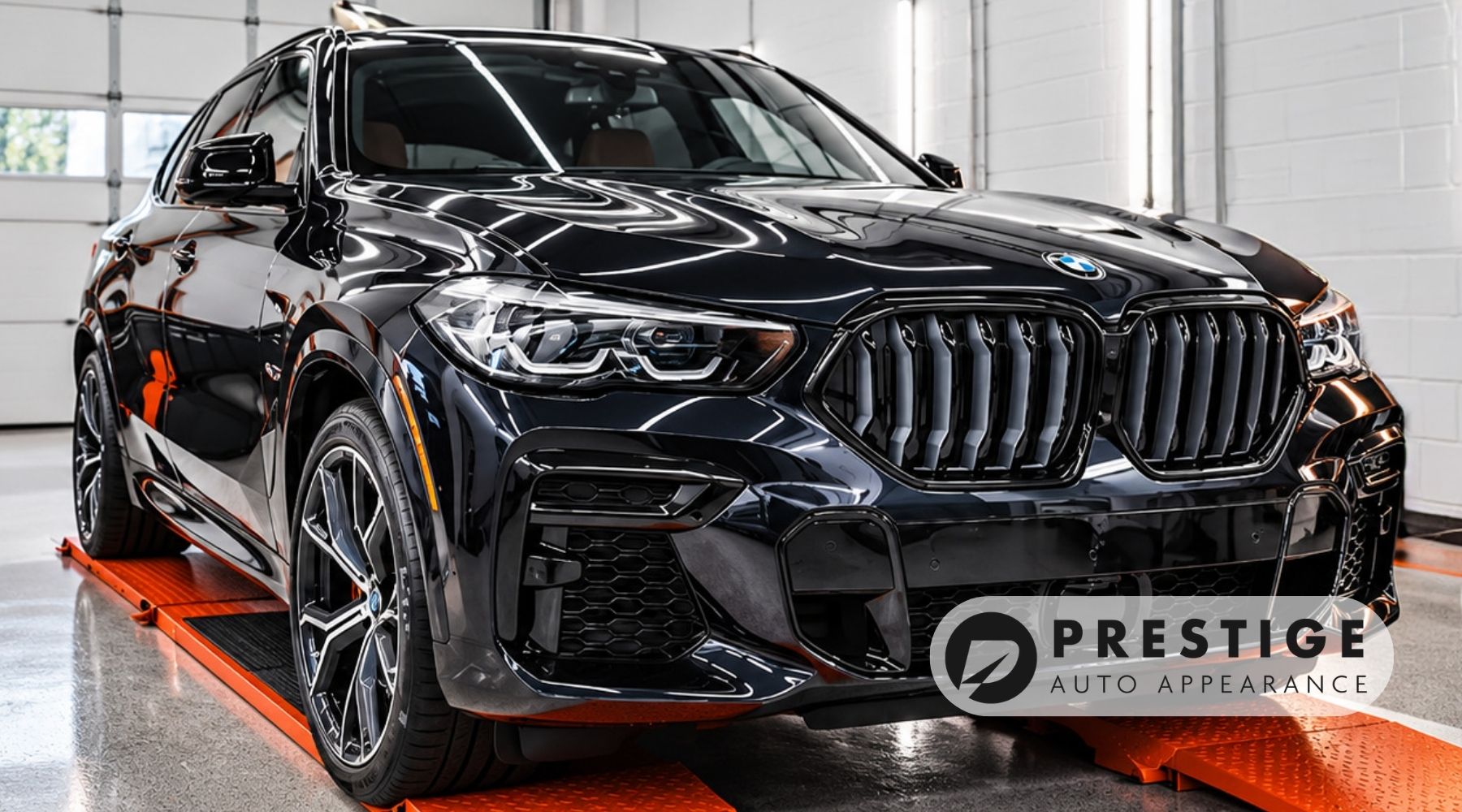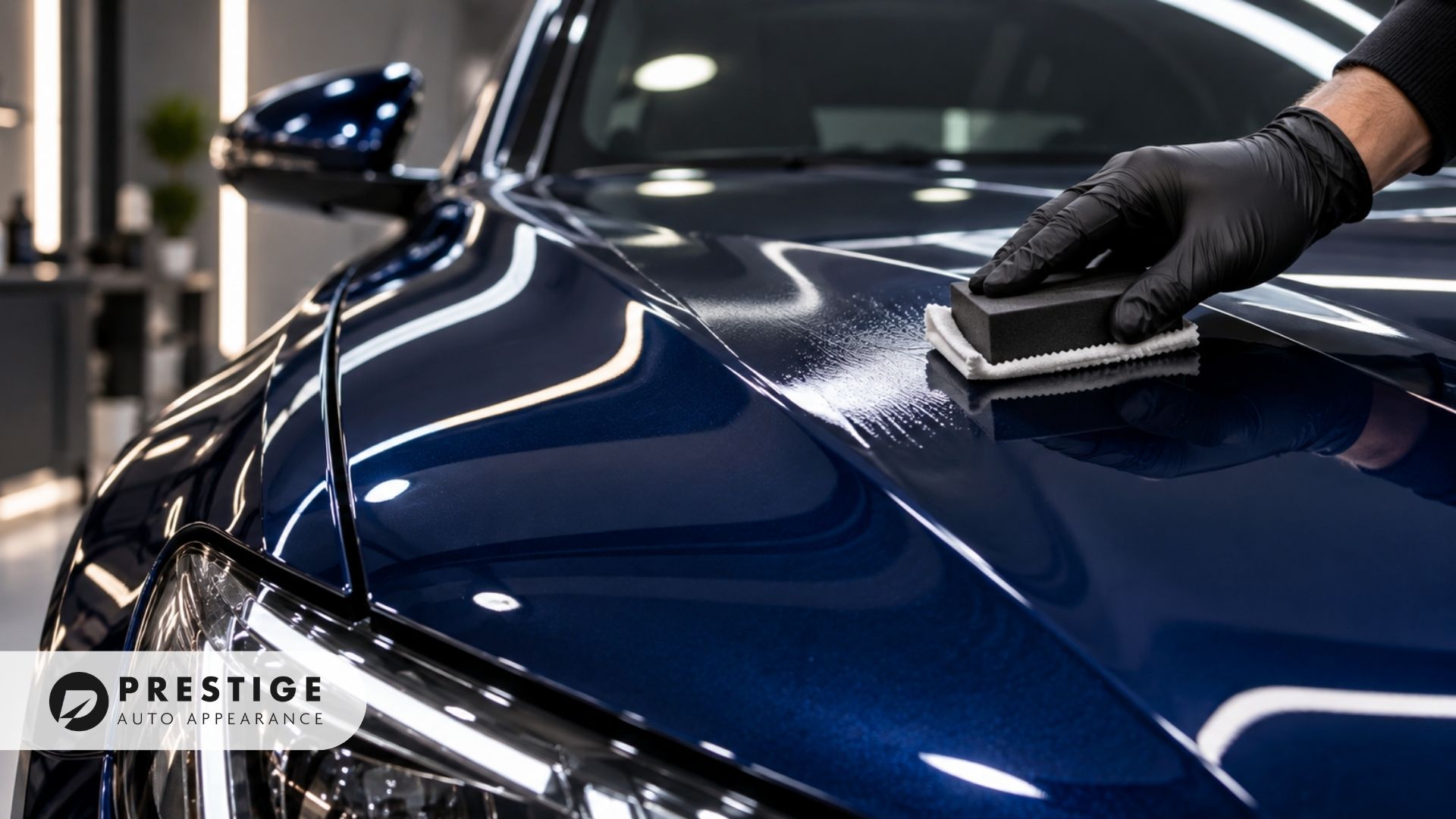

Car paint correction before paint protection film is not required for every vehicle, but the paint must always be thoroughly cleaned, decontaminated, and inspected first. At Prestige Auto Appearance, we recommend correction only when swirl marks, scratches, haze, or other defects could remain visible beneath the film and affect the finished appearance.
That distinction matters. Paint protection film, commonly called PPF or clear bra, is transparent. It protects the finish already on your vehicle; it does not replace, repaint, or automatically perfect it.
After more than 20 years of caring for vehicles in Allentown and throughout the Lehigh Valley, we have learned that the best preparation plan is rarely one-size-fits-all. Some vehicles need only careful surface preparation. Others benefit from light polishing, targeted scratch removal, or more extensive paint correction.
The right choice depends on the condition of your paint, the amount of PPF being installed, and how refined you want the finished vehicle to look.
Do You Need Paint Correction Before PPF Installation?

No, a full paint correction is not always necessary before PPF installation. However, every vehicle should receive professional inspection and preparation before the film is applied.
We typically see three situations in our Allentown studio.
When Standard Surface Preparation May Be Enough
A newer or carefully maintained vehicle may have clean, glossy paint with very few visible defects. In that case, the preparation process may include:
- A thorough exterior wash
- Bug, tar, and road-film removal
- Iron-contaminant removal
- Clay-bar treatment when necessary
- Cleaning around trim, emblems, edges, and panel gaps
- Removal of waxes, sealants, oils, or incompatible coatings
- A final paint inspection and panel cleaning
If the finish already looks excellent under professional lighting, aggressive car paint correction before paint protection film may add cost without providing a meaningful improvement.
When Light Polishing May Be Recommended
Many vehicles have fine swirl marks, light haze, water spots, or minor dealership wash marks. These defects may not justify a multi-stage correction.
A light enhancement polish or one-step correction can improve gloss and clarity while preserving as much factory clear coat as possible. We may also recommend spot polishing when only one or two areas need attention.
When More Extensive Correction May Make Sense
Broader correction may be worthwhile when the paint has:
- Heavy or widespread swirl marks
- Buffer trails from previous polishing
- Noticeable oxidation or haze
- Etched water spots
- Multiple correctable scratches
- Uneven gloss across several panels
- Visible defects that would be distracting beneath full-body PPF
Dark-colored vehicles often reveal these issues more clearly, particularly in direct sunlight or bright inspection lighting.
Why Does the Paint Under PPF Matter?
Paint protection film is designed to create a durable, transparent barrier over the vehicle’s painted panels. It can help protect vulnerable areas from rock chips, road debris, minor abrasions, insects, stains, and everyday environmental exposure.
What it cannot do is restore damaged paint underneath it.
The film follows the surface of the panel. If the paint has deep scratches, oxidation, chips, sanding marks, heavy swirls, or severe water-spot etching, those imperfections may remain visible after installation.
Some very light marks may appear less noticeable once the film is applied. However, we never recommend relying on PPF to hide paint defects. The result depends on the depth and type of defect, the vehicle’s color, lighting conditions, and the clarity of the film.
Our approach to car paint correction before paint protection film is based on realistic expectations. We identify which defects can be safely improved, which may remain visible, and which require repair rather than polishing.
What Is the Difference Between Paint Correction and PPF Preparation?
Paint correction and PPF surface preparation are connected, but they are not the same service.
Understanding the difference can help you make a more informed decision and avoid paying for unnecessary work.
What Does PPF Surface Preparation Include?
PPF surface preparation focuses on creating a clean, stable surface for film installation. Even a nearly flawless vehicle can carry embedded contamination that is difficult to see or feel until the paint is properly cleaned.
Our preparation process may include:
- Hand washing the vehicle
- Removing road film, insects, tar, and organic residue
- Treating embedded iron contamination
- Using a clay-bar treatment where needed
- Cleaning panel gaps and installation edges
- Removing surface protection products from the installation area
- Inspecting the finish under controlled lighting
- Completing a final residue-free panel cleaning
This process reduces the risk of dirt, fibers, wax residue, or other contaminants becoming trapped beneath the transparent urethane film.
What Does Paint Correction Add?
Paint correction is a controlled polishing process used to reduce defects in the clear coat. It may involve machine polishing, selected pads, polishing compounds, and repeated inspections.
Depending on the vehicle, car paint correction before paint protection film may consist of:
- A gloss-enhancing polish
- One-step paint correction
- Targeted swirl-mark removal
- Spot scratch removal
- Multi-stage correction for more extensive defects
We always aim to use the least aggressive method that achieves a worthwhile improvement. Clear coat is finite, so removing more material than necessary is not a sign of better workmanship.
You can learn more about our approach to professional paint correction in Allentown and the types of defects the service is designed to address.
Why Should Paint Defects Be Removed Before PPF Is Applied?
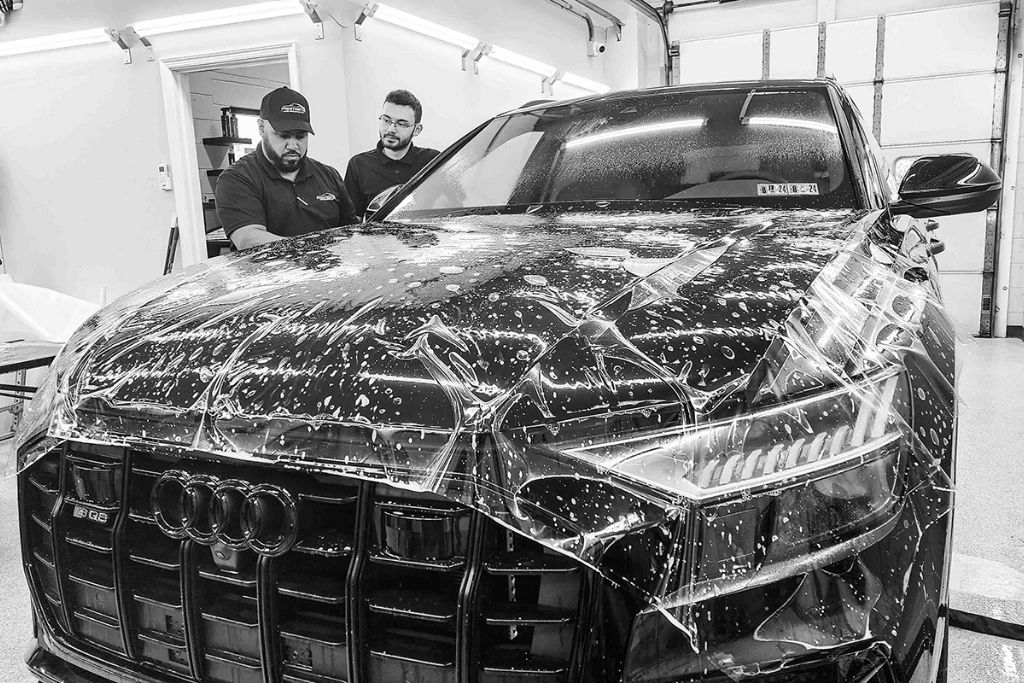
Correcting appropriate defects before installation creates a cleaner visual foundation for the film.
PPF may remain on a vehicle for years. If a distracting defect is visible underneath it, correcting that area later will usually require removing the film first. The panel may then need new film after polishing or repair is completed.
Addressing suitable defects beforehand may provide:
- Better gloss and visual clarity
- More consistent reflections
- Fewer noticeable swirls beneath the film
- A more refined appearance on dark paint
- Less chance of removing PPF later to correct the covered panel
There is also an important difference between defects that affect appearance and contaminants that affect preparation.
Swirl marks and light scratches primarily influence how the finish looks. Wax, sealants, polishing oils, dirt, or incompatible surface products may interfere with proper preparation and PPF adhesion.
That is why car paint correction before paint protection film should not be treated as a mandatory package. The necessary cleaning must always be completed, while polishing should be based on the condition of the paint.
Why Might a New Car Still Need Paint Correction?
A new vehicle is not necessarily a defect-free vehicle.
Before reaching its owner, a car may go through manufacturing, transportation, outdoor storage, dealership preparation, and several washes. During that time, the finish can collect:
- Rail dust and embedded metal particles
- Water spots
- Adhesive residue
- Fine handling scratches
- Automated car-wash marks
- Swirl marks from improper washing
- Buffer trails from rushed polishing
- Contamination from outdoor storage
We have inspected new vehicles that looked excellent in showroom lighting but revealed clear defects under professional inspection lights.
That does not mean every new car needs heavy correction. In many cases, car paint correction before paint protection film on a new vehicle involves only a light enhancement polish or targeted work on selected panels.
For owners planning to protect a recent purchase, our guide to installing paint protection film on a new car explains why early protection can be valuable before daily driving adds chips and wear.
Why Is a Professional Paint Inspection Important?
We do not recommend paint correction based only on the vehicle’s age or a quick glance in outdoor light.
A proper paint inspection helps us identify the type, location, and severity of defects. We assess the vehicle in a clean environment using lighting that reveals conditions ordinary garage or showroom lighting can miss.
During an inspection, we may evaluate:
- Swirl marks and wash-induced marring
- Scratch depth
- Haze and oxidation
- Water-spot etching
- Rock chips and exposed paint damage
- Previous body-shop repairs
- Repainted panels
- Clear-coat condition
- Existing waxes, sealants, or coatings
- Contamination around edges and trim
We also ask how the vehicle is used. A daily commuter traveling Route 22 or I-78 may have different priorities than a weekend vehicle or collector car. A partial-front installation may call for a different preparation plan than full-body PPF.
Our recommendation for car paint correction before paint protection film also considers your expectations. Some owners want practical protection with minimal cosmetic refinement. Others want the paint to look as polished and uniform as reasonably possible before it is covered.
Both goals are valid. Our responsibility is to explain the difference honestly.
What Can Paint Correction Fix Before PPF?
Paint correction can improve many defects located within the upper portion of the clear coat.
Depending on their depth and severity, correctable issues may include:
- Fine swirl marks
- Light wash scratches
- Mild paint haze
- Buffer trails
- Some water spots
- Minor clear-coat etching
- Light oxidation
- Isolated surface scratches
The improvement possible varies from one vehicle to another. Paint systems differ in thickness, hardness, previous care, and repair history.
We may perform a small test section to determine how the finish responds before recommending a broader correction plan. This helps us set realistic expectations rather than promising that every mark can be removed.
What Can Paint Correction Not Repair?
The table below provides a practical starting point.
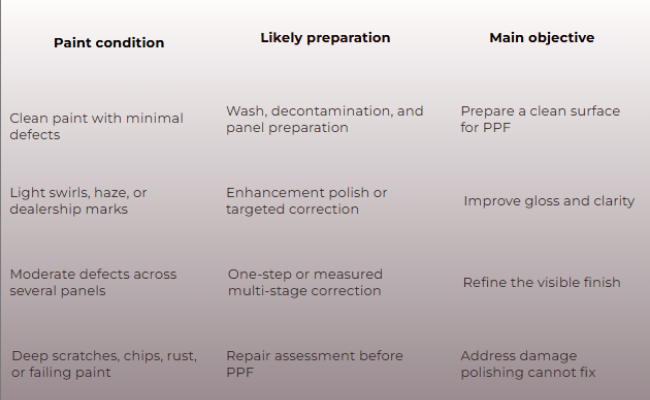
This is only a general guide. We confirm the appropriate service after seeing the vehicle in person.
A well-maintained car receiving partial-front protection may need little or no correction. A dark vehicle receiving full-body film may benefit from more extensive refinement because the finish of every covered panel will influence the final appearance.
Does PPF Coverage Affect the Correction Plan?
Yes. The amount and location of the film can affect how we approach car paint correction before paint protection film.
A full-front package generally focuses on panels exposed to direct road impact, such as the front bumper, hood, front fenders, and mirrors. A high-impact package may extend protection to rocker panels, A-pillars, or other areas vulnerable to debris.
When only selected panels will be covered, targeted correction may provide the most practical value. We can focus on defects located within the installation area rather than polishing the entire vehicle unnecessarily.
Full-body PPF requires us to consider the overall consistency of the paint because nearly every painted panel will remain visible beneath the film.
Local driving conditions matter as well. Allentown and Lehigh Valley drivers frequently encounter highway debris, road construction, winter salt, gravel, and changing weather. Our comparison of full-front and high-impact PPF packages for Pennsylvania highways can help you decide which areas deserve priority.
Why Does Professional PPF Installation Matter?
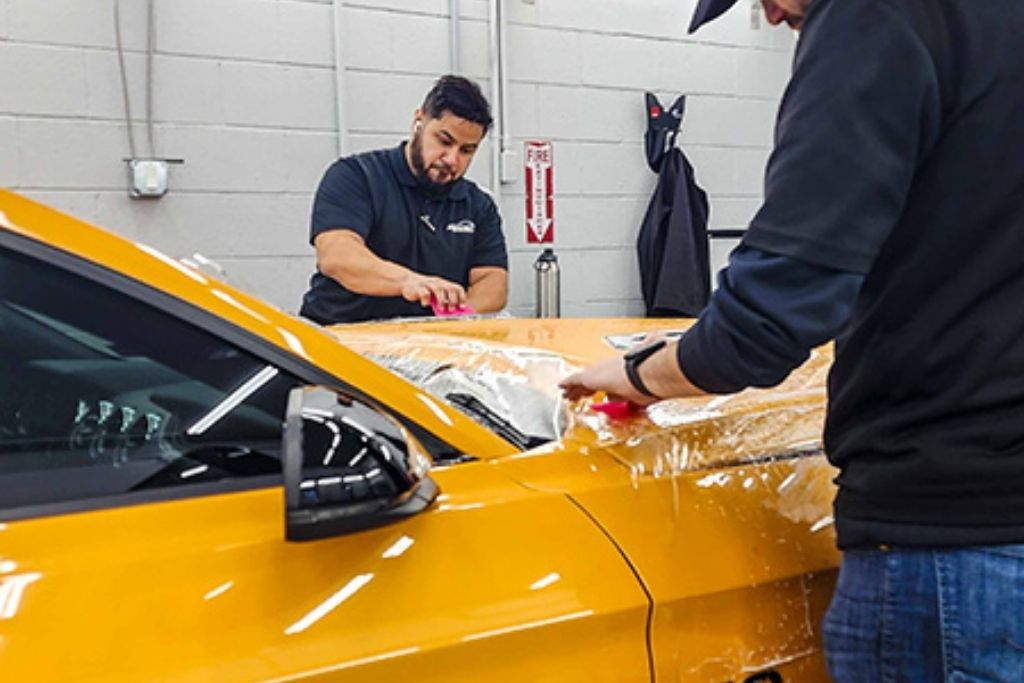
Even excellent paint correction cannot compensate for careless film installation.
The result depends on:
- Thorough surface preparation
- A clean working environment
- Careful film handling
- Accurate pattern placement
- Proper alignment and stretching
- Clean edge finishing
- Contamination control
- Detailed inspection before delivery
An experienced installer should also know how to prepare freshly polished paint without leaving behind polishing oils, residue, or new marring.
Before selecting a shop, read our guide on choosing the right PPF installer in Allentown. It explains the practical questions to ask about experience, installation standards, film quality, workmanship, and aftercare.
Why Choose Prestige Auto Appearance for Paint Correction and PPF?
At Prestige Auto Appearance, we have served Allentown and the Lehigh Valley for more than 20 years. Our award-winning automotive appearance studio is located near Dorney Park, where our team provides paint protection film, paint correction, ceramic coating, window tinting, and full detailing.
Offering both paint refinement and protection services allows us to evaluate the complete project. We do not need to treat polishing and PPF as unrelated steps or recommend correction without considering the film coverage.
We begin by examining the vehicle and discussing your goals. We then recommend standard preparation, targeted polishing, or a more complete correction plan based on what the finish actually needs.
You can review our paint protection film installation options in Allentown to learn more about available coverage and the areas commonly protected.
Get the Right Paint Preparation Before PPF in Allentown
The best approach to car paint correction before paint protection film is not to polish every vehicle aggressively. It is to inspect the finish, remove contamination, correct defects that meaningfully affect the result, and preserve as much healthy clear coat as possible.
Some cars need only professional surface preparation. Others benefit from a light polish, targeted defect removal, or a more complete paint correction service.
At Prestige Auto Appearance, we will explain what we see, what can realistically be improved, and which preparation option makes sense for your vehicle and PPF coverage.
To receive an honest, vehicle-specific recommendation, contact our Allentown automotive protection team or request a personalized quote for paint correction and professional PPF installation.