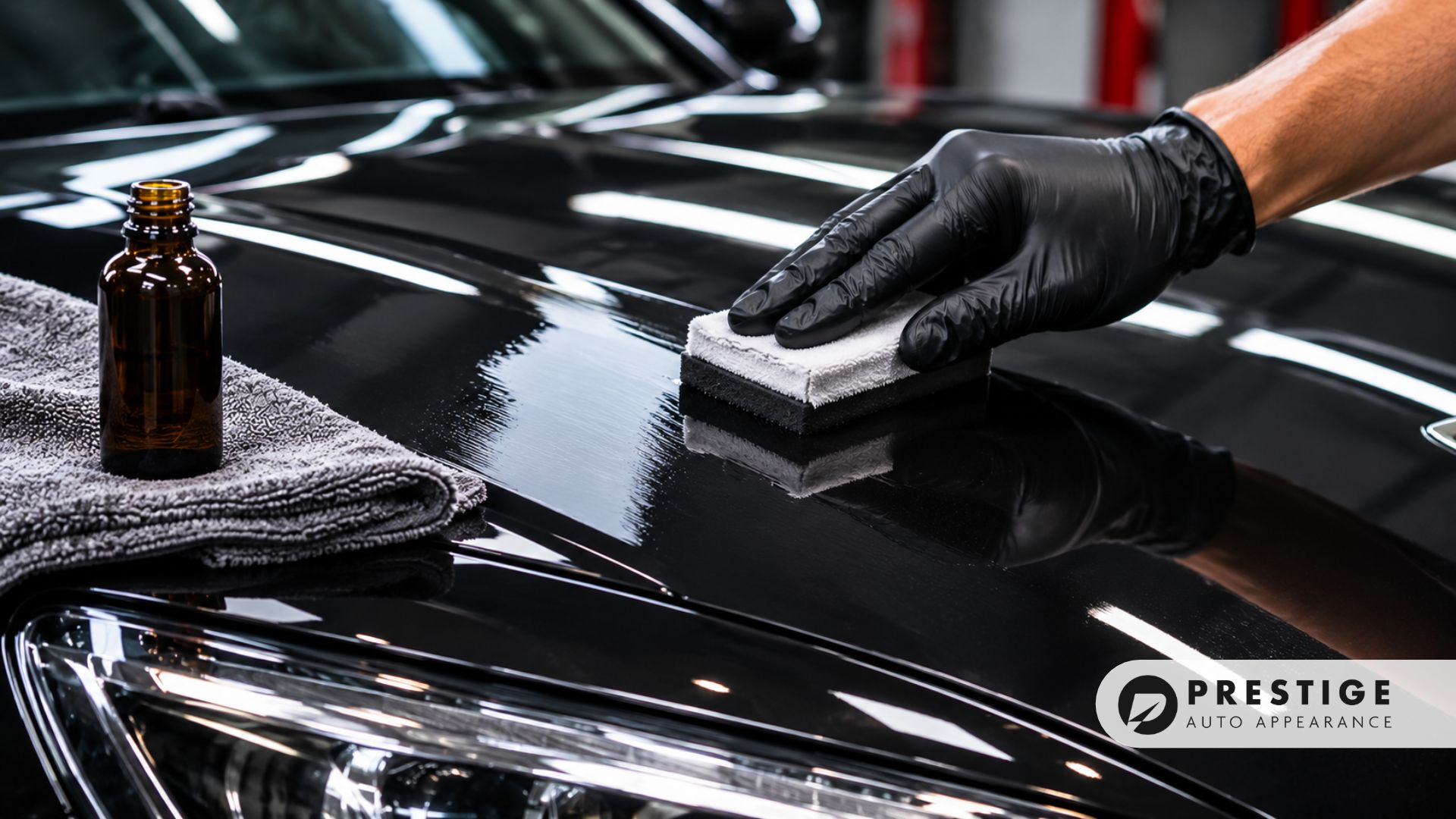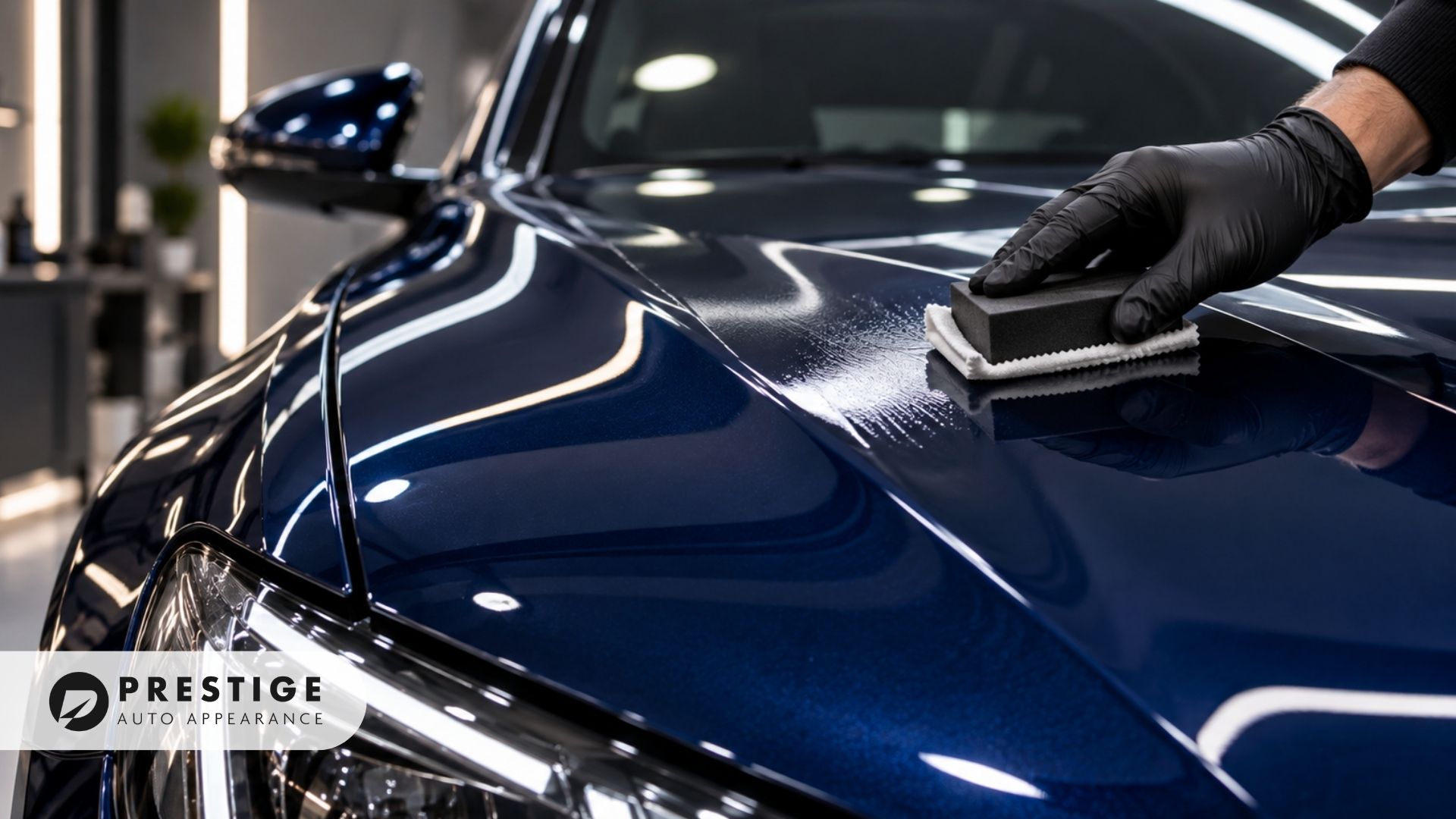

Preventing water spots on your car starts with removing water before mineral deposits can dry on the paint, glass, and other exterior surfaces. Washing with filtered water, drying the vehicle promptly, avoiding direct sunlight during cleaning, and maintaining a protective layer can significantly reduce water spotting.
For drivers in Allentown and throughout the Lehigh Valley, water spots can develop after washing, rainfall, or exposure to sprinklers. Pennsylvania’s changing weather conditions, combined with mineral content in water and environmental contamination, make proper exterior maintenance especially important. Professional ceramic coating can also help by creating a hydrophobic surface that makes water easier to remove, although it cannot eliminate water spots completely.
Why Do Water Spots Form on Car Paint?
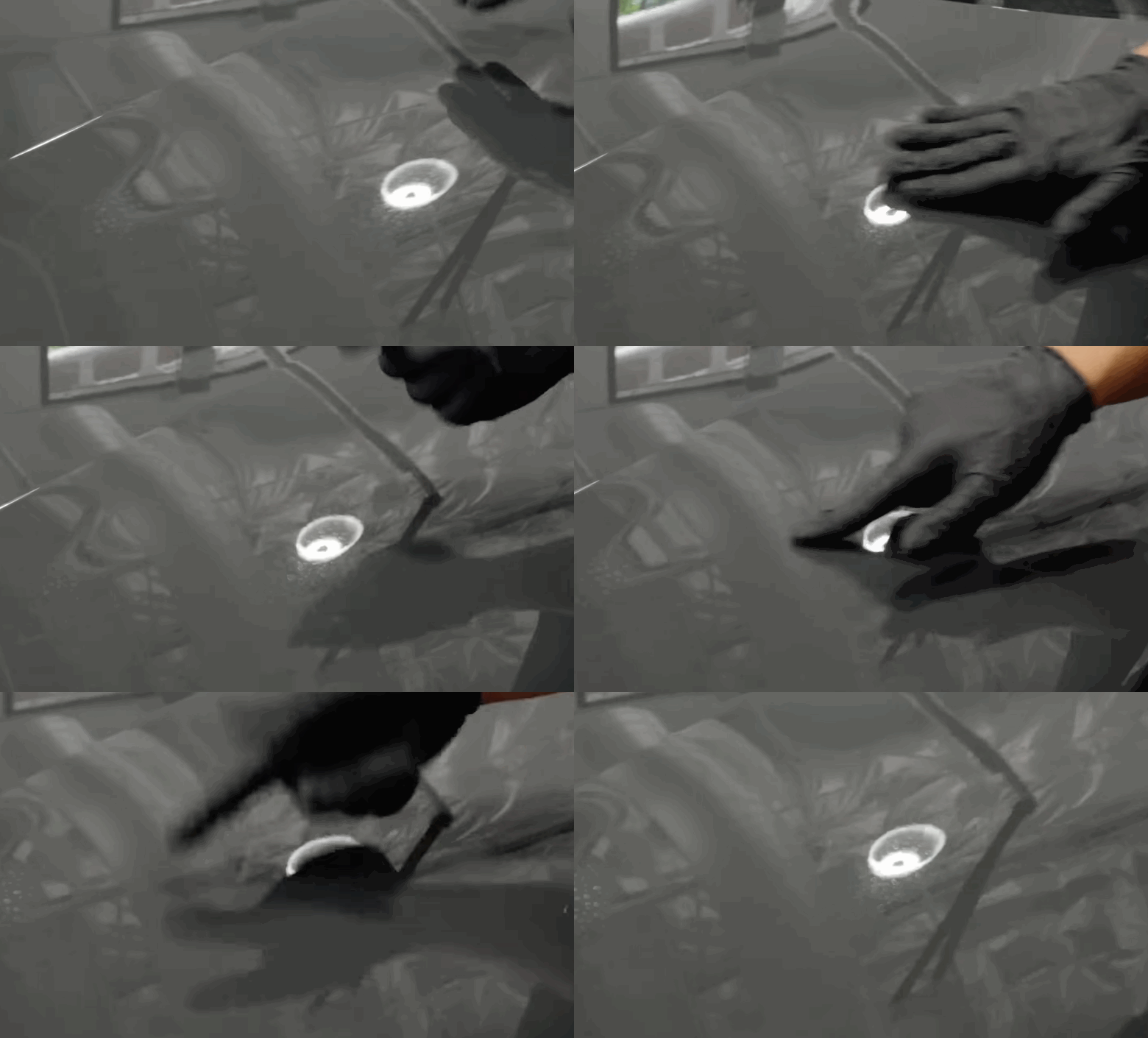
Water spots form when droplets evaporate and leave behind minerals, dissolved solids, or environmental contaminants on the vehicle’s surface. The deposits can appear as cloudy circles, chalky marks, or irregular patches that become particularly noticeable on darker paint colors.
Not all water spots develop in the same way. Understanding their differences helps determine whether regular cleaning will be enough or whether additional treatment is necessary.
- Mineral deposits: Calcium, magnesium, and other dissolved minerals can remain after water evaporates.
- Environmental residue: Rainwater can collect airborne particles and pollutants before drying on the exterior.
- Etched water spots: Some deposits or chemical contaminants can affect the clear coat, leaving marks that require more than ordinary washing.
- Recurring water spots: Repeated exposure to sprinklers, hard wash water, or improper drying can create new deposits even after previous spots have been removed.
At Prestige Auto Appearance, we consider the condition of the paint before recommending a treatment. Fresh mineral deposits may be relatively simple to address, while etched marks can require professional paint correction. Identifying the difference early helps avoid unnecessary abrasion or ineffective cleaning products.
How Can You Prevent Water Spots After Washing Your Car?
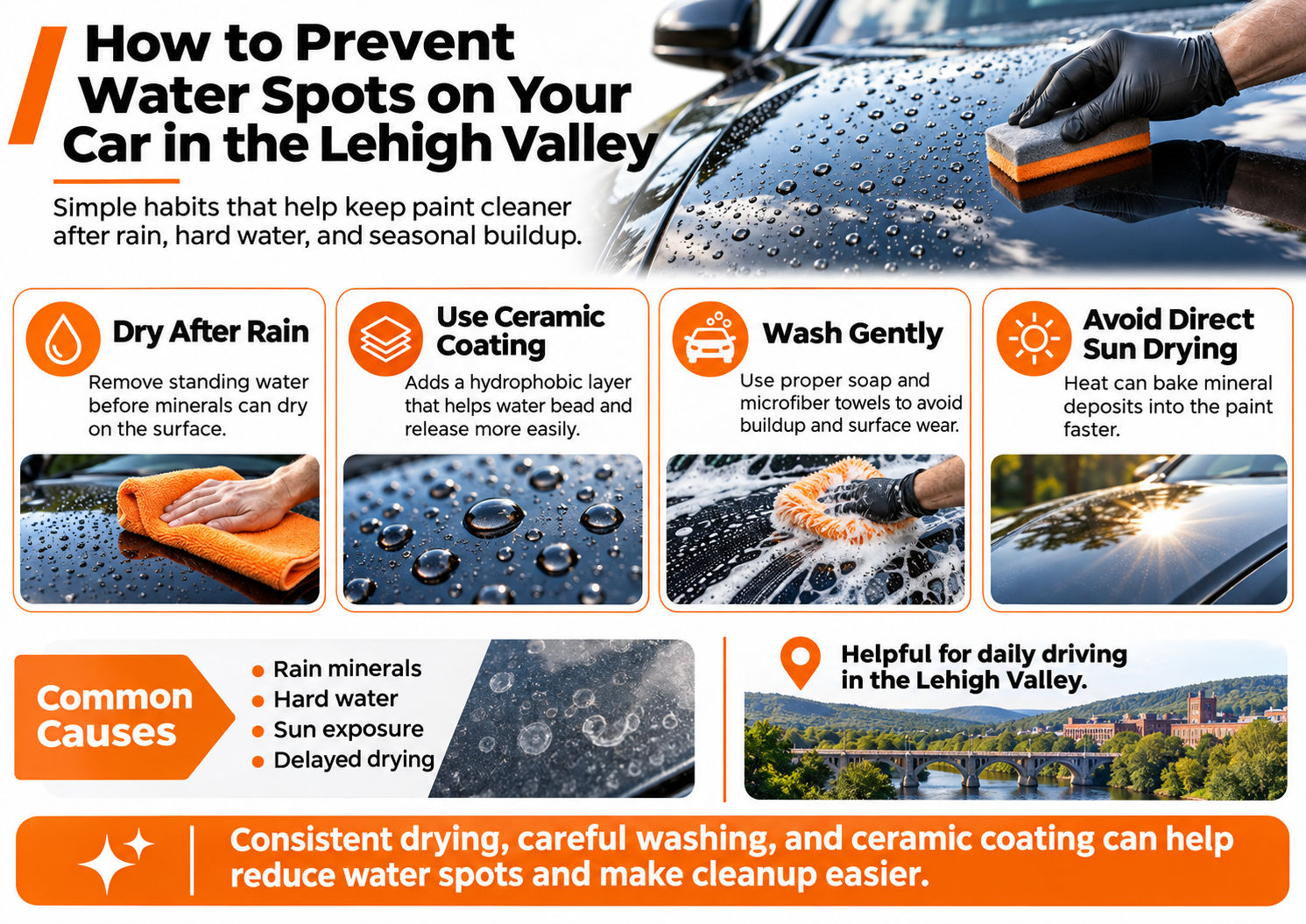
The most effective way to prevent water spots after washing is to keep the vehicle cool, use clean water, and dry every exterior surface before droplets evaporate. Allowing rinse water to sit on the paint, particularly under direct sunlight, gives minerals an opportunity to remain behind.
A careful washing routine can make a noticeable difference:
- Wash in the shade. Choose a covered area or a cooler part of the day to reduce rapid evaporation.
- Use appropriate automotive shampoo. A quality car wash solution helps remove contamination without unnecessarily stripping existing protection.
- Rinse thoroughly. Remove soap and loosened dirt before they have an opportunity to dry.
- Consider filtered or deionized water. Reducing dissolved minerals in the final rinse can help minimize spotting.
- Dry with clean microfiber towels or a suitable automotive blower. Pay attention to mirrors, trim, emblems, and panel gaps where water tends to collect.
For Lehigh Valley drivers who wash their vehicles at home, the mineral content of the water supply can make a difference. Water that looks perfectly clean may still contain dissolved solids that become visible after evaporation.
A consistent drying process is often more effective than repeatedly trying to remove spots after they appear. Keeping the surface protected also makes it easier to wash without applying unnecessary pressure to the paint.
Can Rainwater Cause Water Spots on Your Car?
Rainwater can cause water spots when droplets collect airborne contaminants or leave residue behind as they evaporate. Although rainwater may initially contain fewer dissolved minerals than some household water supplies, it is not guaranteed to leave a vehicle spotless.
Rain can interact with dust, pollen, road film, and other material already present on the exterior. Once the water evaporates, some of that contamination may remain.
How Rainwater Leaves Spots Behind
Around Allentown, Bethlehem, and Easton, seasonal conditions can influence how frequently this happens. Spring pollen can accumulate on parked vehicles, while summer heat encourages faster evaporation. During colder months, dirty road spray and winter residue introduce additional contaminants.
Explore Different Rainwater Scenarios
Select a condition to see how it affects your vehicle and what cleaning response makes sense.
Spring Pollen
Pollen can collect on parked vehicles and mix with rainwater. When droplets dry, visible residue may remain on the finish.
Recommended response: If visible pollen and grime remain, wash using suitable automotive shampoo and clean wash media.
Avoid This Common Cleaning Mistake
Do not wipe dried dirt from the paint with a dry towel. Dragging particles across the finish can introduce scratches. Use appropriate washing methods to remove contamination safely.
Not every rain shower requires an immediate wash. Light rain on an otherwise clean surface may not require immediate attention. The best response depends on how dirty the vehicle becomes and whether visible contamination remains.
Does Ceramic Coating Prevent Water Spots?
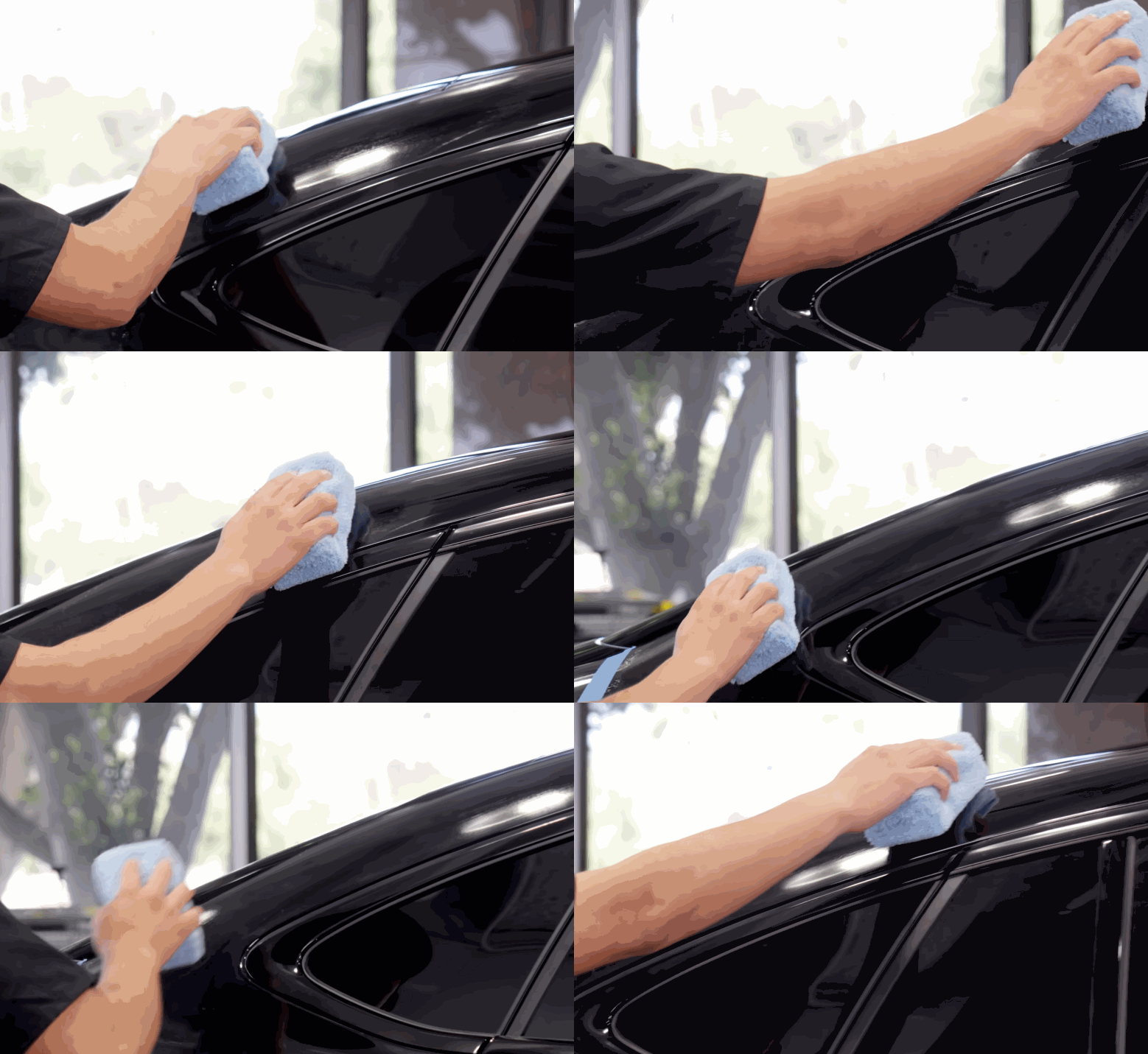
Ceramic coating helps reduce water spot buildup by creating a hydrophobic surface, but it does not make a vehicle completely resistant to mineral deposits or chemical etching. Its main advantage is making water and contamination easier to manage through proper maintenance.
How Hydrophobic Protection Helps
A professionally applied coating changes how water interacts with the exterior. Instead of spreading across the paint as easily, droplets tend to bead and move off the surface more readily.
This can simplify washing and drying, particularly when combined with appropriate cleaning products and techniques. However, beaded water that remains on a horizontal panel can still evaporate and leave mineral deposits behind.
Why Application Quality Matters
At Prestige Auto Appearance, we focus on proper surface preparation before ceramic coating application. Existing contamination and paint imperfections should be evaluated before the coating is installed, allowing the finished surface to achieve the intended appearance and performance.
The coating also needs appropriate curing and ongoing maintenance. Even a premium product cannot compensate for repeatedly allowing mineral rich water to dry on the vehicle.
For drivers who want easier exterior care throughout the Lehigh Valley’s changing seasons, ceramic coating can be a valuable part of a broader water spot prevention routine rather than a substitute for regular cleaning.
Is Ceramic Coating Worth It for Water Spot Prevention?
Ceramic coating can be worth it for water spot prevention when your goal is easier cleaning, improved water behavior, and additional resistance to environmental contamination. However, it is important to understand that even professionally applied ceramic protection cannot guarantee a completely spot free vehicle.
The greatest advantage is how the coating changes everyday maintenance. Dirt and mineral residue may be easier to remove before they become stubborn deposits, and the slick surface can make washing less demanding.
For someone who regularly washes a vehicle at home, parks outdoors, or drives throughout the Lehigh Valley in changing weather, those benefits can be particularly useful.
Ceramic coating also provides advantages beyond water behavior, including enhanced gloss and resistance to certain chemical and environmental contaminants. That makes it appealing to owners who want broader paint protection rather than a solution focused exclusively on water spots.
Still, a coating should never be treated as permission to leave water sitting on the paint indefinitely. Proper drying and regular washing remain essential regardless of the product installed.
Keep Your Car Free From Water Spots in the Lehigh Valley
Preventing water spots in the Lehigh Valley comes down to controlling mineral deposits, drying your vehicle properly, and maintaining a protective surface that makes contamination easier to remove. Washing in the shade, using appropriate cleaning products, avoiding sprinkler exposure, and addressing fresh deposits promptly can make a noticeable difference.
For drivers in Allentown, Bethlehem, Easton, and surrounding communities, seasonal weather and daily road exposure make consistent exterior care especially valuable. Professional ceramic coating can complement those habits by improving water behavior and making routine maintenance more manageable.
Give Your Vehicle the Protection It Deserves
Contact Prestige Auto Appearance in Allentown, PA, to discuss professional ceramic coating application and exterior paint protection for your vehicle. We can assess the condition of your finish, explain the available protection options, and help you choose an approach that makes sense for your driving and maintenance needs.
Contact Prestige Auto Appearance →